
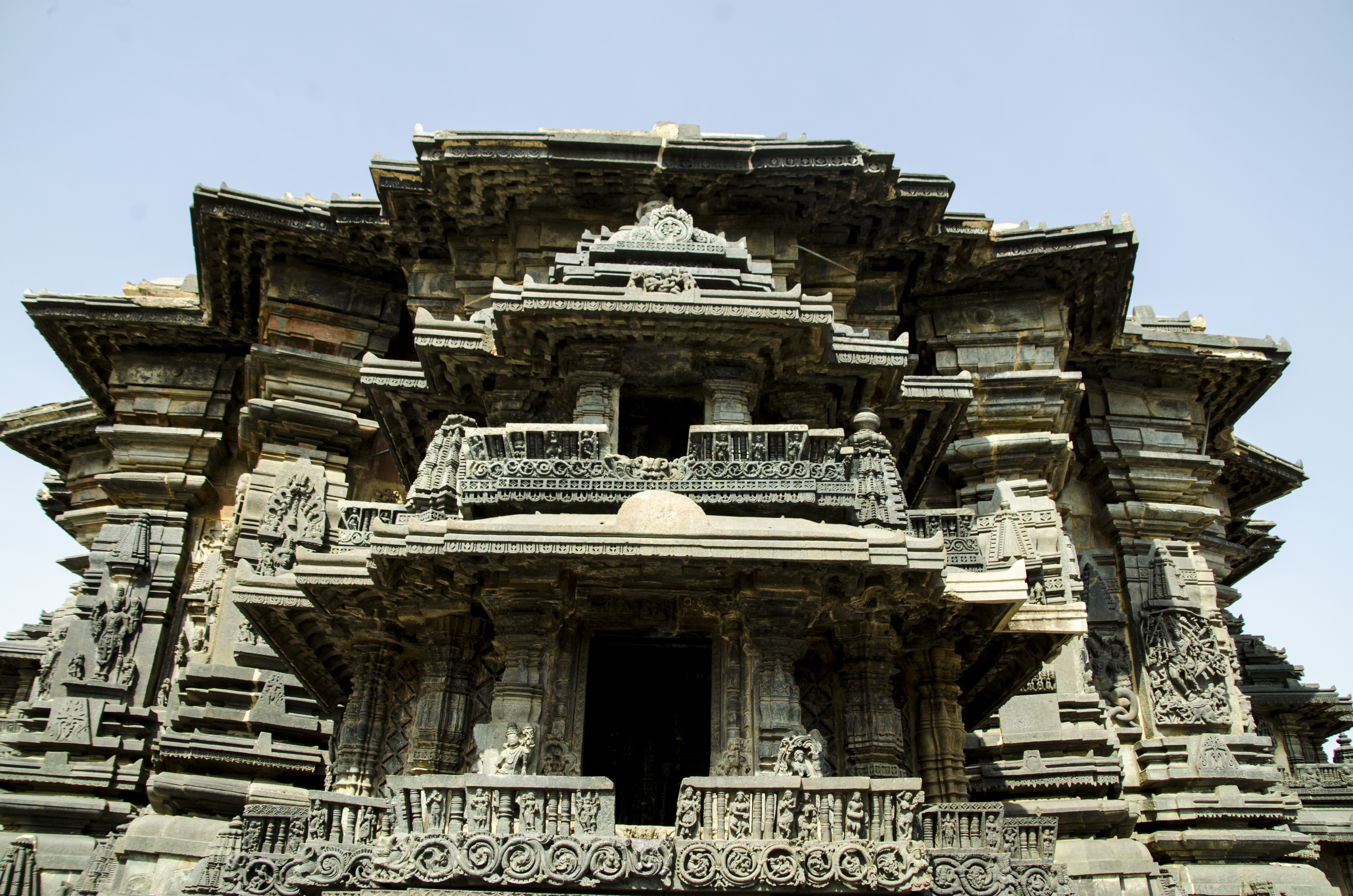
Chennakeshava Temple
Soapstone Jewel of the Hoysalas on the Yagachi
Overview
The Chennakeshava Temple at Belur is a Hoysala temple to Vishnu whose construction was begun in 1117 CE under King Vishnuvardhana. Worked in soft chloritic schist (soapstone), it is famous for its star-shaped platform, ornate pillars and the bracket figures known as madanikai. It stands with Halebidu and Somanathapura in the 'Sacred Ensembles of the Hoysalas', inscribed by UNESCO as a World Heritage Site in 2023. It remains an active place of worship, so daily rituals continue. MyTripMyTravel pairs Belur with Halebidu on an unhurried private day of Hoysala art.
Belur was a capital of the Hoysala dynasty, and its Chennakeshava Temple was the centrepiece of that ambition. Tradition holds that Vishnuvardhana raised it to mark a military victory, with construction beginning in 1117 CE. What survives is a single main shrine (ekakuta) set on a raised, many-angled platform that invites you to walk around and read its carvings.
The building material, soapstone, is soft when freshly quarried and hardens with exposure, which let Hoysala sculptors carve extraordinary detail. Look for the deep-cut pillars inside the hall, no two treated alike, and the celestial madanikai brackets beneath the eaves. Every surface, from friezes of elephants and horsemen to scenes from the epics, rewards slow attention.
Because worship never stopped here, Belur is a living temple rather than a museum piece. Priests conduct daily pujas, and pilgrims come alongside visitors drawn by the art. Modest dress and shoe removal at the shrine are expected.
At a glance
Chennakeshava Temple in brief
What to see
Highlights
Madanikai brackets
Celestial female figures carved as roof brackets, among the most admired Hoysala sculptures.
Star platform
The raised, many-angled jagati around the shrine that frames the temple and its friezes.
Ornate pillars
Lathe-turned and hand-carved hall pillars, each treated differently, including the famed Narasimha pillar.
Wall friezes
Continuous bands of elephants, lions, horsemen and epic scenes running around the base.
Gravity pillar
A free-standing pillar in the courtyard, part of the wider temple complex and gateway.
Visitor information
Our tips
Combine Belur with Halebidu, about 16 km away, in one day.
Remove shoes and dress modestly before entering the shrine.
Hire a licensed guide to decode the friezes and madanikai.
Arrive early to beat tour groups and the midday heat.
Good to know
Chennakeshava Temple, your questions
Is it still an active temple?
Yes. Daily worship continues, so respect ritual timings and remove your shoes at the shrine.
When was it built?
Construction began in 1117 CE under the Hoysala king Vishnuvardhana; the wider complex grew over later decades.
Is it a UNESCO site?
Yes, as part of the 'Sacred Ensembles of the Hoysalas', inscribed in 2023 alongside Halebidu and Somanathapura.
What is it made of?
Soapstone (chloritic schist), which allowed the very fine, deep carving Hoysala temples are known for.
How much time do I need?
About 1.5 to 2 hours to walk the platform, study the carvings and see the interior.
Visit with us
See Chennakeshava Temple, properly.
A private, chauffeured visit with a licensed expert guide, timed for the best light and the smallest crowds. We fold Chennakeshava Temple into a wider Belur and South India itinerary, built entirely around you.
- Skip the queue where possible, at the right hour
- Licensed local guide who brings the story to life
- Private car and chauffeur, door to door
Plan your trip
Plan a visit to Chennakeshava Temple
Free, no obligation quote. Your details stay private.