
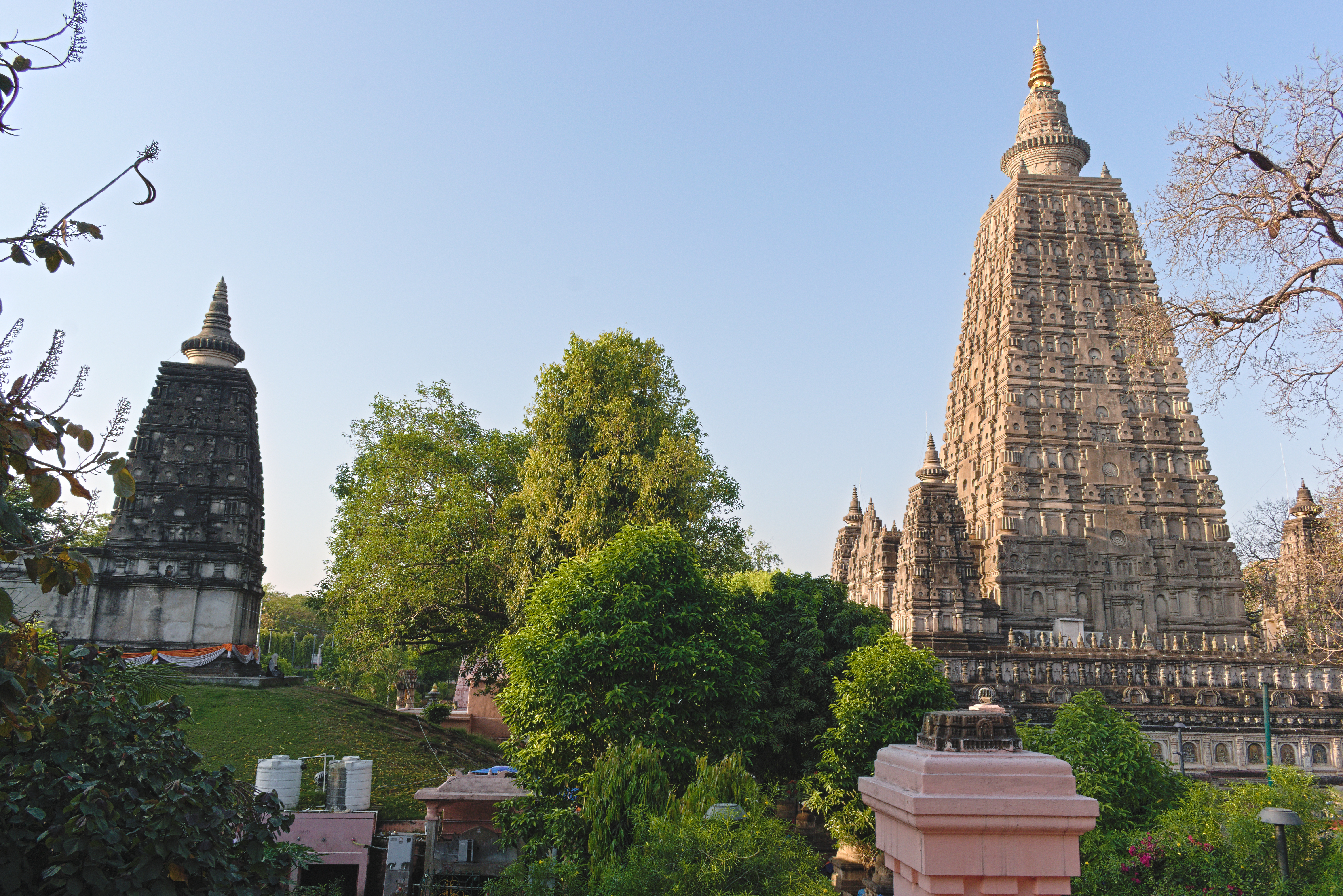
Mahabodhi Temple
The Seat of the Buddha's Enlightenment
Overview
The Mahabodhi Temple at Bodh Gaya, Bihar, stands on the most sacred site in Buddhism, the spot where Gautama Buddha attained enlightenment beneath the Bodhi Tree. A shrine was first established here by Emperor Ashoka around 250 BCE; the present brick temple, with its roughly 55-metre pyramidal tower, dates largely from the Gupta period of the 5th to 6th century CE, making it one of the oldest brick temples in India. A descendant of the original Bodhi Tree grows behind it, beside the Vajrasana or Diamond Throne. It became a UNESCO World Heritage Site in 2002. MyTripMyTravel arranges a serene, respectful visit.
Bodh Gaya is where Buddhism begins. Under a fig tree here, the wandering ascetic Siddhartha Gautama is said to have attained enlightenment and become the Buddha, which makes the Mahabodhi Temple the holiest of the faith's four great pilgrimage sites, a place people travel from across Asia to sit quietly, not to sightsee.
Ashoka established the first shrine around 250 BCE; the soaring brick tower that stands today is largely Gupta-era work of the fifth or sixth century, among the earliest surviving brick temples in India, extensively restored in the nineteenth century. Behind it grows a descendant of the original Bodhi Tree, beside the sandstone Vajrasana that marks the seat of enlightenment.
MyTripMyTravel times the visit for early morning, when monks of many nations chant and the precinct is calm, with guidance on the temple's rules and history so the experience is unhurried and respectful.
At a glance
Mahabodhi Temple in brief
What to see
Highlights
The main temple tower
The ~55 m pyramidal shikhara, one of India's earliest surviving brick temples.
The Bodhi Tree
A descendant of the tree under which the Buddha is said to have attained enlightenment.
The Vajrasana
The sandstone 'Diamond Throne' marking the place of enlightenment, attributed to Ashoka.
Lotus pond & votive stupas
The surrounding sacred precinct where pilgrims meditate and make offerings.
Circumambulation path
The route walked in prayer by monks and pilgrims of many nations.
Visitor information
Our tips
Come at dawn, when monks chant and the precinct is at its calmest.
Mobile phones are not allowed inside; deposit them at the counter and carry only a camera with its pass.
Sit a while under the Bodhi Tree, the atmosphere, not the sightseeing, is the point.
Dress modestly and move clockwise around the temple as pilgrims do.
Good to know
Mahabodhi Temple, your questions
Why is Bodh Gaya sacred?
It is where the Buddha attained enlightenment under the Bodhi Tree, the holiest of Buddhism's four great pilgrimage sites.
How old is the temple?
A shrine dates to Ashoka around 250 BCE; the present brick temple is largely 5th to 6th century CE, among the oldest in India.
Is the Bodhi Tree the original?
No, the present tree is a descendant of the original, propagated over centuries, growing on the same spot behind the temple.
Is it a UNESCO site?
Yes, the Mahabodhi Temple Complex was inscribed as a World Heritage Site in 2002.
Can I take photographs?
Yes, with a paid camera pass; mobile phones must be deposited at the entrance.
Visit with us
See Mahabodhi Temple, properly.
A private, chauffeured visit with a licensed expert guide, timed for the best light and the smallest crowds. We fold Mahabodhi Temple into a wider Bodhgaya and East India itinerary, built entirely around you.
- Skip the queue where possible, at the right hour
- Licensed local guide who brings the story to life
- Private car and chauffeur, door to door
Plan your trip
Plan a visit to Mahabodhi Temple
Free, no obligation quote. Your details stay private.