
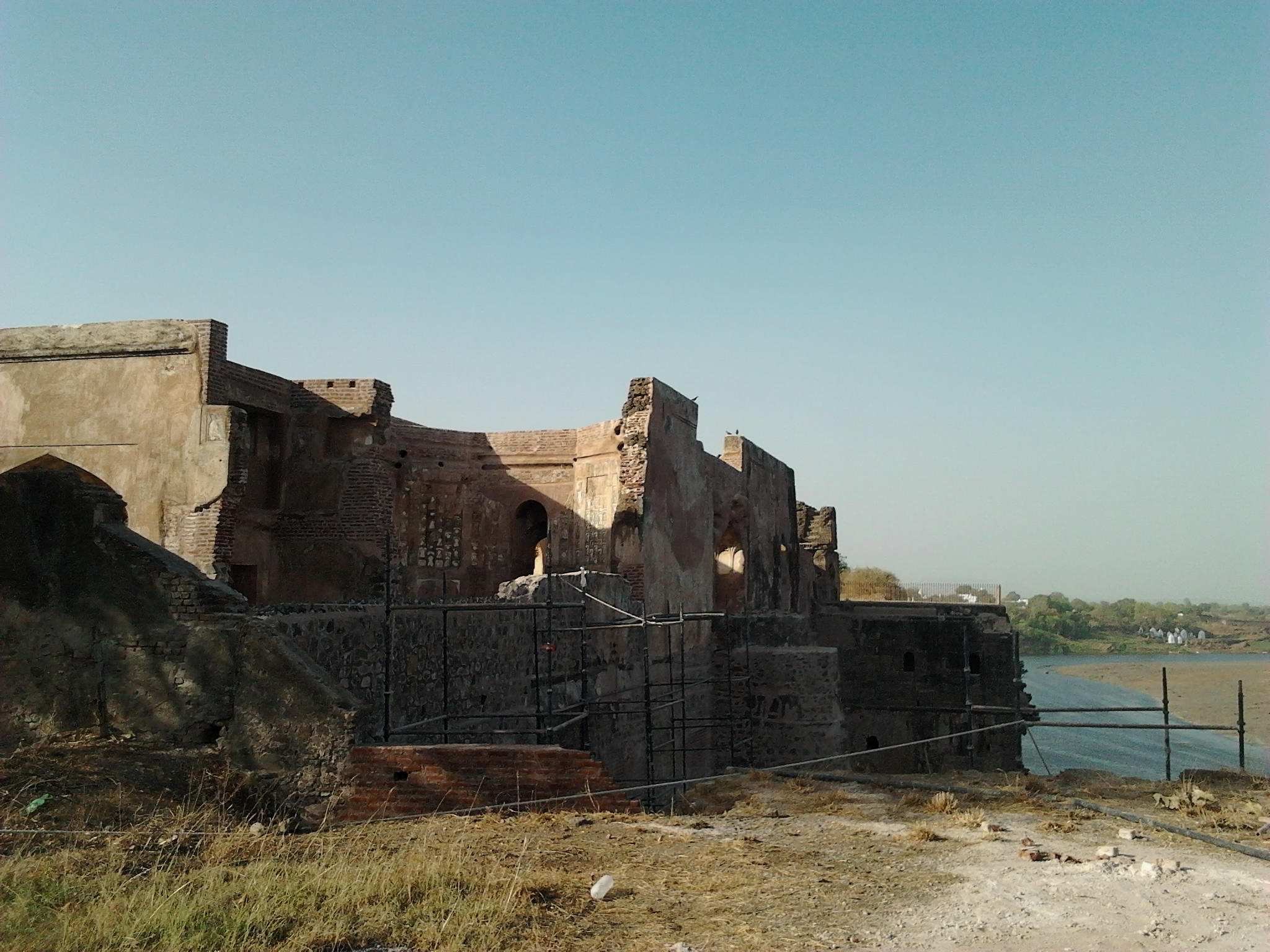
Shahi Qila (Burhanpur)
The Mughal Riverside Palace on the Tapti
Overview
The Shahi Qila is a Mughal riverside palace-fort on the bank of the Tapti at Burhanpur, a city that served as a key Mughal base in the Deccan. Now partly ruined, it is famed for its carved and once-painted hammam, or royal bath. Shah Jahan governed from Burhanpur, and it was here that his empress Mumtaz Mahal died in 1631. MyTripMyTravel arranges a guided visit to the surviving palace and hammam, set within the broader Mughal story of Burhanpur.
Burhanpur was one of the Mughal empire's most important southern cities, a launching point for campaigns into the Deccan, and the Shahi Qila was its royal seat. Built above the Tapti river, the palace-fort combined defensive strength with the refinement expected of a Mughal residence.
Its most admired survival is the hammam, the royal bath, whose ceilings and walls retain carved and painted decoration. The wider complex, though much of it now stands in ruin, includes remains of audience halls, water features and river-facing terraces that speak to its former grandeur.
The city holds a poignant place in Mughal history: Shah Jahan served as governor here, and his empress Mumtaz Mahal died in Burhanpur in 1631. MyTripMyTravel guides visitors through the palace and hammam and links them to the city's other Mughal monuments so the story is complete.
At a glance
Shahi Qila (Burhanpur) in brief
What to see
Highlights
The royal hammam
The best-preserved part of the palace, its bath chambers still carrying carved and painted ceiling decoration of high Mughal quality.
River-facing terraces
The palace was built above the Tapti, and its terraces and walls still command the riverfront setting.
Remains of the audience halls
Ruined structures on the site recall the Diwan-e-Aam and Diwan-e-Khas of a working Mughal court.
Water channels and fountains
Traces of the palace's hydraulic system show how water was drawn up and moved through the royal apartments.
The Mumtaz connection
Burhanpur is where Mumtaz Mahal died in 1631, giving the Shahi Qila a direct link to the story behind the Taj Mahal.
Visitor information
Our tips
Focus on the hammam, its surviving painted and carved work is the highlight.
Tread carefully, as much of the wider palace is ruined and uneven.
Pair the visit with Burhanpur's other Mughal sites for the full historical picture.
A guide is valuable, as the ruins carry little interpretive signage.
Good to know
Shahi Qila (Burhanpur), your questions
What is the Shahi Qila at Burhanpur?
It is a Mughal palace-fort built above the Tapti river, once the royal seat of the empire's important southern city of Burhanpur.
What is the highlight of the site?
The royal hammam, or bath, which preserves carved and painted decoration and is the best-surviving part of the palace.
What is its connection to Mumtaz Mahal?
Mumtaz Mahal, the empress for whom the Taj Mahal was built, died in Burhanpur in 1631 while the court was based there.
Did Shah Jahan live here?
Shah Jahan served as governor of the Deccan from Burhanpur and was associated with the city and its palace before and during his reign.
Is much of the palace still standing?
Parts of it are ruined, but the hammam and sections of the riverside structure survive and remain worth visiting.
More in Burhanpur
Visit with us
See Shahi Qila (Burhanpur), properly.
A private, chauffeured visit with a licensed expert guide, timed for the best light and the smallest crowds. We fold Shahi Qila (Burhanpur) into a wider Burhanpur and Central India itinerary, built entirely around you.
- Skip the queue where possible, at the right hour
- Licensed local guide who brings the story to life
- Private car and chauffeur, door to door
Plan your trip
Plan a visit to Shahi Qila (Burhanpur)
Free, no obligation quote. Your details stay private.