
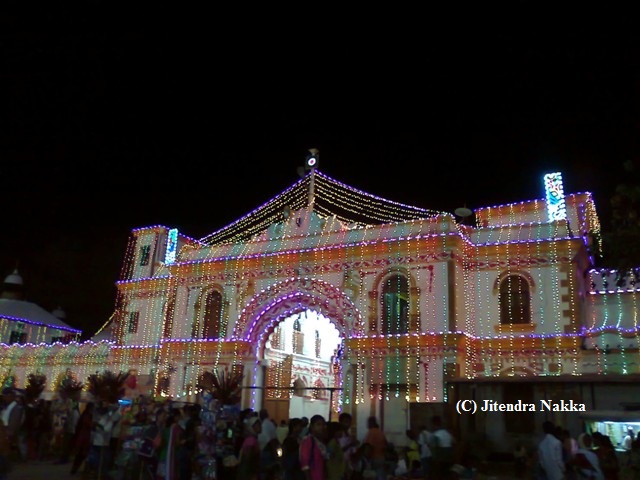
Bastar Palace
The Forest Court of the Bastar Kings
Overview
Bastar Palace in Jagdalpur was the seat of the Kakatiya rulers who governed the former princely state of Bastar, one of central India's most densely forested and tribal regions. The dynasty's presiding deity is Danteshwari, whose worship runs through Bastar's royal traditions and its famous Dussehra, a distinctive, weeks-long tribal festival quite unlike the mainstream Indian version. The palace itself is a relatively restrained structure rather than a grand Rajput-style edifice, in keeping with Bastar's forested, community-rooted character. MyTripMyTravel frames a visit within Bastar's living tribal culture, with local context and respect for the communities whose heritage it represents.
Bastar Palace is best understood not as a spectacle but as a doorway into a region. Jagdalpur was the seat of the Kakatiya rulers of Bastar, a princely state carved from thick forest and home to some of India's most vibrant Adivasi cultures, and the palace reflects that world rather than the marble grandeur of the northern courts.
At the centre of the royal tradition stands the goddess Danteshwari, tutelary deity of the Bastar house. Her worship threads through the region's ceremonies and above all through Bastar Dussehra, a festival stretched over many weeks, rooted in local deities and tribal participation, that has little in common with the Ram-centred Dussehra of the plains.
MyTripMyTravel treats the palace as one stop within Bastar's living culture: its weekly markets, its metal, bell and terracotta crafts, and its festivals, visited with local guidance and genuine respect for the communities who sustain them.
At a glance
Bastar Palace in brief
What to see
Highlights
Seat of the Bastar rulers
The residence of the Kakatiya line that governed the princely state of Bastar.
Danteshwari devotion
The goddess at the centre of Bastar's royal and festival life.
Bastar Dussehra
A weeks-long festival tied to the royal house and local deities, unlike mainstream Dussehra.
Restrained architecture
A modest structure reflecting Bastar's forested, community-rooted character rather than palatial grandeur.
Gateway to tribal Bastar
A starting point for the region's Adivasi cultures, crafts and weekly markets.
Visitor information
Our tips
Treat Bastar as a cultural region, not just a monument, pair the palace with local markets (haats) and craft villages.
Photograph people only with consent; Bastar's communities value their privacy.
Visit around Dussehra for context, but plan for crowds and book well ahead.
Go with a local guide who can interpret the region's tribal traditions respectfully.
Good to know
Bastar Palace, your questions
Who ruled Bastar from here?
The Kakatiya dynasty, rulers of the former princely state of Bastar, centred at Jagdalpur.
Who is Danteshwari?
The presiding goddess of the Bastar royal house, deeply woven into the region's worship and festivals.
What is Bastar Dussehra?
A distinctive, weeks-long festival tied to the royal family and local deities, quite different from the Ram-centred Dussehra of northern India.
Is it a grand palace like in Rajasthan?
No. It is a relatively modest structure, in keeping with Bastar's forested, community-oriented character.
Why visit Bastar?
For one of India's richest living tribal cultures, its crafts, weekly markets and festivals, of which the palace is one entry point.
Visit with us
See Bastar Palace, properly.
A private, chauffeured visit with a licensed expert guide, timed for the best light and the smallest crowds. We fold Bastar Palace into a wider Jagdalpur and Central India itinerary, built entirely around you.
- Skip the queue where possible, at the right hour
- Licensed local guide who brings the story to life
- Private car and chauffeur, door to door
Plan your trip
Plan a visit to Bastar Palace
Free, no obligation quote. Your details stay private.