

Jaipur · 7-day plan
7-Day Jaipur Itinerary
The brief
A 7-day Jaipur, Rajasthan itinerary by MyTripMyTravel is a unhurried deep dive sequenced from real city data, headline heritage at its best hour, deliberate rest, vetted dining, and the chauffeured Elite Fleet handling logistics. The October to March window is optimal; pacing adjusts outside it. Recommended stay tier Palace tier. The plan is a starting architecture, refined to your party during planning.
A 7-day Jaipur itinerary is an unhurried, deep stay, every headline experienced at its best hour, second visits in better light, and time for the secondary places that make Jaipur more than its postcard.
The principle is the same across every length: one signature moment per day, not three; rest engineered in rather than apologised for; logistics invisible to the guest. Everything below is sequenced into a private, chauffeured, escorted mission, never a shared coach.
Day by day
Arrival & Jaipur orientation
Chauffeured arrival into Jaipur via From Agra, the 4. After settling at the curated stay, an unhurried orientation walk or drive frames the city, the pink city of the rajputs, and absorbs travel fatigue without losing daylight.
An early dinner at a vetted heritage table eases the time-shift; we keep day one deliberately light. The full sightseeing protocol begins day two, when the body is on local time.
Amer Fort, the headline
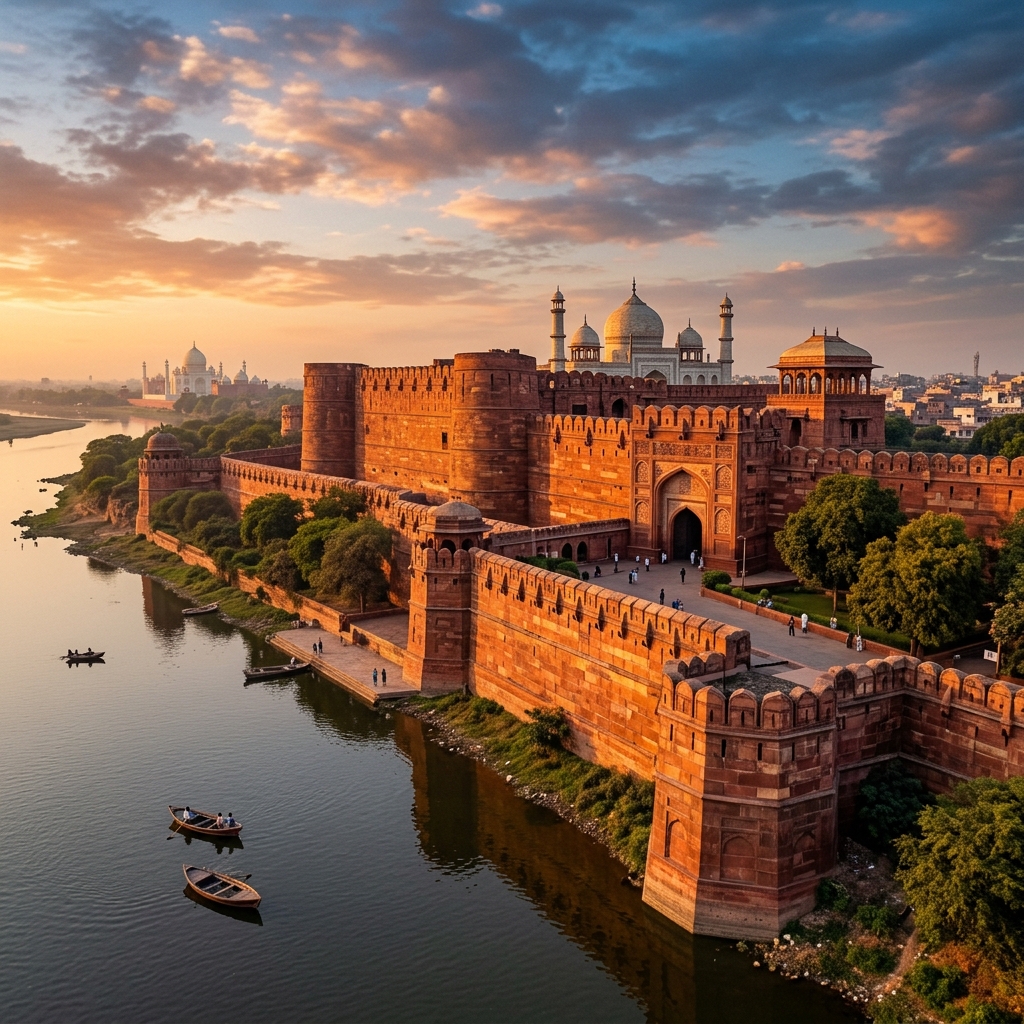
The first full day is reserved for Amer Fort, with escorted access at the best hour. Amer Fort (Amber Fort) is a hilltop Rajput fort-palace 11 km from Jaipur, India, begun in 1592 by Raja Man Singh I and the seat of the Kachhwaha rulers before Jaipur was founded.
A midday return to the stay for lunch and rest, then a softer afternoon, a curated walk, a viewpoint timed for the late light, and a vetted dinner. The day is structured around one signature moment rather than three rushed ones.
Hawa Mahal & deeper Jaipur
Hawa Mahal: The Hawa Mahal ('Palace of Winds') is a five-storey palace façade in Jaipur, India, built in 1799 by Maharaja Sawai Pratap Singh.
Built around the morning hour for Hawa Mahal, with afternoon time for Hawa Mahal and Royal Rajasthani thali.
Hawa Mahal & a slower rhythm
Hawa Mahal: The five-storey 'Palace of Winds' honeycomb façade, photographed best in early light..
The October to March window is optimal for Jaipur; the pacing is built around the light and the heat / cold profile of the season.
Jantar Mantar & evening centrepiece
Jantar Mantar: Jai Singh II's 18th-century stone astronomical instruments, a UNESCO site that still tells time..
Evening is held as a centrepiece, a private heritage dining table, a sunset vantage, or a curated performance, rather than dispersed across multiple stops.
Secondary sites & a curated walk
The seventh-day rhythm tilts to depth, Artisan atelier circuit, Royal Rajasthani dining, and a curated walk through the old quarter or a craft neighbourhood with an expert guide.
By this point in the stay the rhythm of the city is familiar; the day rewards lingering rather than queuing.
Reserve / regional pivot
Day seven is held either as a true reserve day (rest, repeat-favourite, spa time at the stay) or as the pivot into the wider Golden Triangle circuit, a day trip to Agra, Delhi and Udaipur returning the same evening.
Travellers staying longer than seven nights typically extend into the wider region from here, treating Jaipur as the base rather than the whole trip.
Trip context
When to travel
Optimal: October to March. Jaipur is best from October to March, with warm days and cool desert evenings ideal for fort climbs and rooftop dining. The Jaipur Literature Festival (January) and Teej and Gangaur festivals add cultural depth but raise demand, book early. April to June is harsh desert heat; the monsoon greens the Aravalli hills but is short and unpredictable. For the Golden Triangle finale, the winter window is optimal.
Where to stay across the trip
Palace tier: Working Rajput palace hotels with royal suites, stepwell pools, and courtyard durbars. Heritage tier: Restored havelis inside or near the walled Pink City with hand-painted interiors. Resort tier: Aravalli-foothill luxury resorts with spa wings for a slower final two nights.
Tier is matched to the kind of trip rather than a price ladder. A celebration leans to the top tier; a recovery or wellness stay leans to the calmer tier; a city-base for regional extension prioritises practicality.
Onward & continuity
Jaipur is rarely the whole trip, it is a node in the Golden Triangle. The same chauffeured fleet continues seamlessly into the wider circuit (Agra, Delhi and Udaipur). Inter-leg permits and timing are handled before you travel.
Good to know
7-day Jaipur FAQ
Is a 7-day Jaipur itinerary enough?
Yes, 7 days is a strong stay that covers the headlines at their best hour without compression and includes a deliberate slower day.
When is the best time for a 7-day Jaipur trip?
October to March. Jaipur is best from October to March, with warm days and cool desert evenings ideal for fort climbs and rooftop dining. The Jaipur Literature Festival (January) and Teej and Gangaur festivals add cultural depth but raise demand, book early. April to June is harsh desert heat; the monsoon greens the Aravalli hills but is short and unpredictable. For the Golden Triangle finale, the winter window is optimal.
Can the 7-day plan be customised?
Entirely. Every itinerary below is a starting architecture; we adjust days, hotels, and stops to your party while holding the 7-day rhythm.
Is the itinerary private?
Always, a single party with a dedicated chauffeur on the GPS-tracked Elite Fleet protocol, escorted access at monuments. Never a shared group departure.
Other lengths
Ready to book
Itineraries featuring Jaipur
Prefer a fully planned, day-by-day tour? These private, chauffeured itineraries feature Jaipur or the wider Golden Triangle, each customisable to this 7-day plan.


Plan with us
Plan your 7-day Jaipur trip
Private, chauffeured travel with this 7-day Jaipur plan tuned to your pace. Tell us your dates and party size, and we reply with a tailored itinerary and a transparent quote.
Plan your trip
Plan your 7-day Jaipur trip
Free, no obligation quote. Your details stay private.