
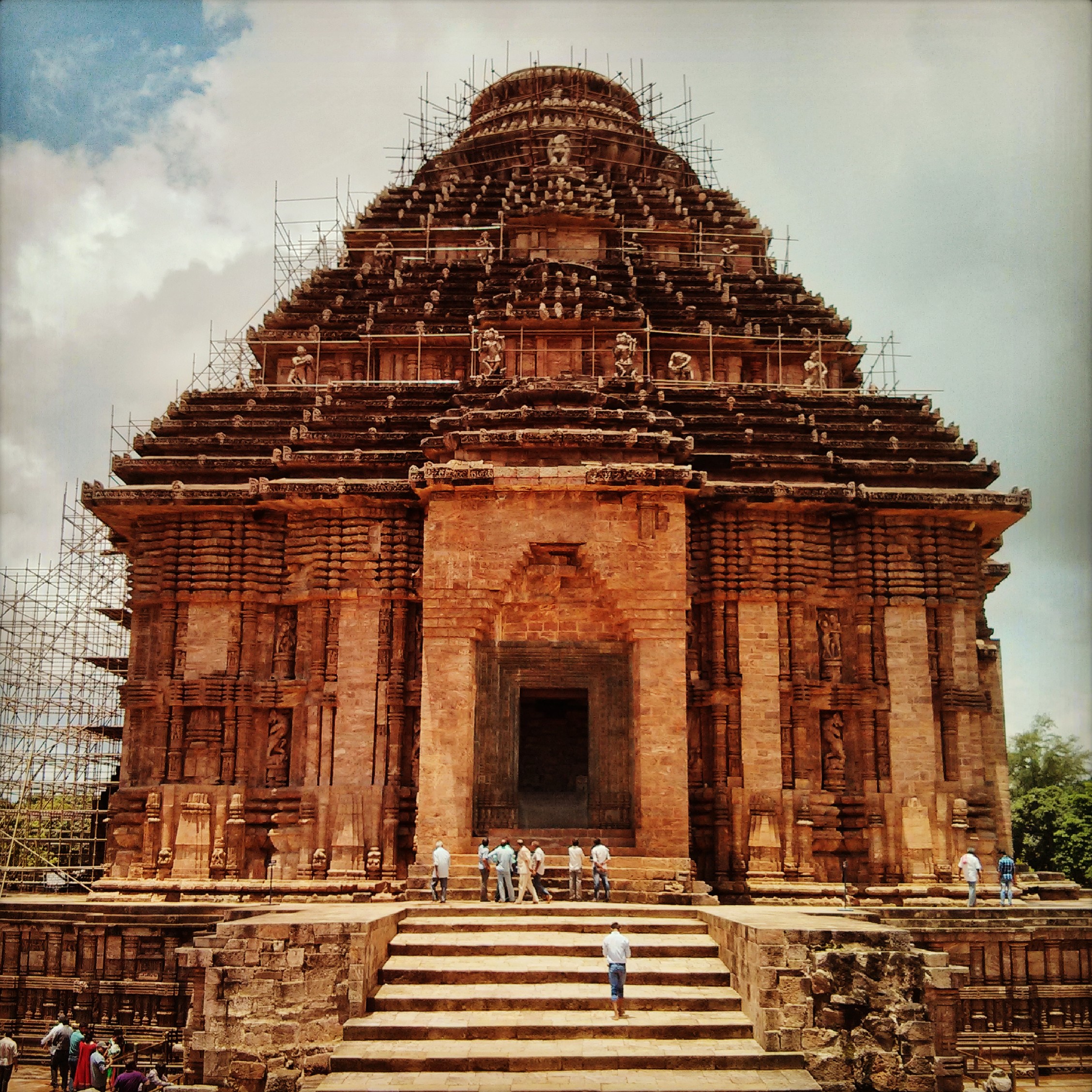
Konark Sun Temple
The Sun God's Chariot in Stone
Overview
Konark Sun Temple is a 13th-century Hindu temple on the Odisha coast, built around 1250 by King Narasimhadeva I of the Eastern Ganga dynasty and dedicated to Surya, the sun god. Conceived as the deity's colossal chariot, it rides on 24 intricately carved stone wheels drawn by seven straining horses. A UNESCO World Heritage Site, its towering main sanctuary has collapsed, but the surviving jagamohana (porch) remains a masterpiece of Kalinga architecture. European sailors called it the 'Black Pagoda'. MyTripMyTravel arranges an escorted visit with an expert guide to decode the sculpture.
Konark is architecture as cosmic machine. The entire temple was conceived as the sun god Surya's chariot, sweeping across the sky on 24 giant wheels pulled by seven horses, and the closer you look, the more literal the conceit becomes, down to the axles, spokes, and hubs carved in stone.
Narasimhadeva I of the Eastern Ganga dynasty built it around 1250. The soaring main tower (deul) fell centuries ago, but the surviving audience hall (jagamohana) and its base carry an astonishing density of Kalinga carving, celestial dancers, musicians, elephants, war scenes, and the frank erotic panels that Odishan temple art shares with Khajuraho.
MyTripMyTravel visits Konark with an expert guide who reads the iconography and demonstrates how the great wheels double as working sundials, then times the light on the coastal sandstone.
At a glance
Konark Sun Temple in brief
What to see
Highlights
The 24 chariot wheels
Intricately carved stone wheels, several of which function as accurate sundials, the guide reads the time from the shadows.
The seven horses
The straining steeds that 'pull' the sun god's chariot across the sky, representing the days of the week.
The jagamohana
The surviving pyramidal audience hall, its interior sealed with sand by engineers to keep it standing.
The Surya images
The green-chlorite standing figures of Surya set in the temple's outer niches, among its finest sculpture.
Erotic & daily-life reliefs
The dense bands of dancers, musicians, lovers, and courtly scenes that cover the plinth.
Visitor information
Our tips
Take an expert guide, the wheel-as-sundial and the chariot symbolism are invisible without one.
Visit in early-morning or late-afternoon light, when the raking sun brings the carving into relief.
Add the on-site Archaeological Survey museum for sculpture rescued from the collapsed tower.
Konark is a day trip from Puri via the coastal road, we sequence it with the Puri and Bhubaneswar temples.
Good to know
Konark Sun Temple, your questions
Why is Konark called the 'Black Pagoda'?
European sailors used it as a coastal landmark and named it the 'Black Pagoda', in contrast to the whitewashed 'White Pagoda' of the Jagannath Temple at Puri.
Can you go inside the temple?
The surviving jagamohana was filled with sand and sealed long ago for structural stability, so it is experienced from outside; the sculpture is all on the exterior anyway.
Do the wheels really tell the time?
Yes, several of the 24 wheels are calibrated as sundials, and a guide can read the hour from the shadow on the spokes.
How long do I need at Konark?
About 1.5 to 2 hours for the temple, the wheels, and the on-site museum with a guide.
Visit with us
See Konark Sun Temple, properly.
A private, chauffeured visit with a licensed expert guide, timed for the best light and the smallest crowds. We fold Konark Sun Temple into a wider Konark and East India itinerary, built entirely around you.
- Skip the queue where possible, at the right hour
- Licensed local guide who brings the story to life
- Private car and chauffeur, door to door
Plan your trip
Plan a visit to Konark Sun Temple
Free, no obligation quote. Your details stay private.