
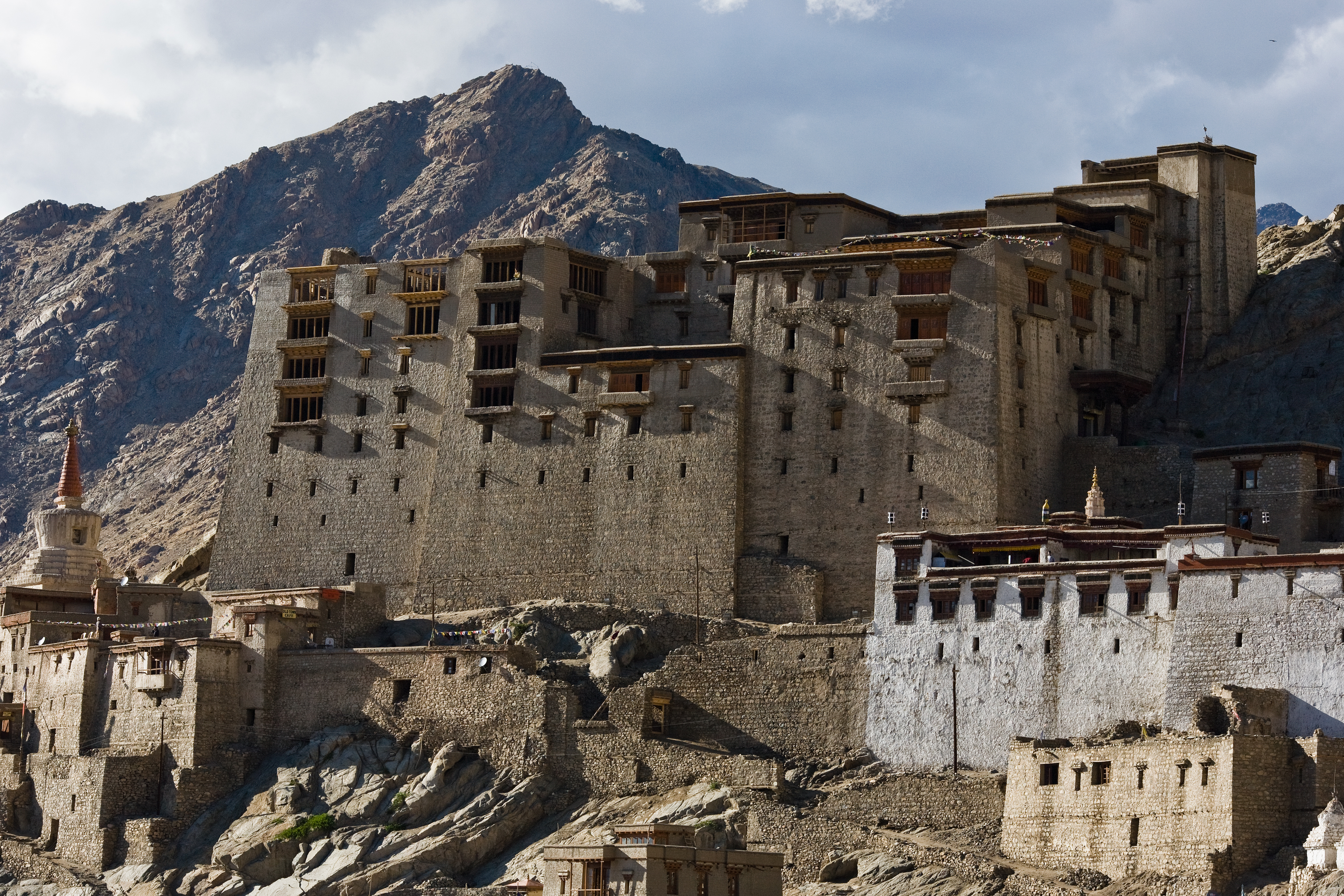
Leh Palace
The Nine-Storey Palace of the Ladakhi Kings
Overview
Leh Palace is a nine-storey former royal palace towering over the old town of Leh, in Ladakh, at about 3,500 m. It was built in the early 17th century by the Ladakhi king Sengge Namgyal (completed around 1642) as the seat of the Namgyal dynasty, and its stepped, inward-sloping walls directly anticipate the later Potala Palace in Lhasa. Now largely an empty shell, it is maintained by the Archaeological Survey of India, with a small museum of thangkas and royal artefacts and sweeping rooftop views over Leh to the Stok range. MyTripMyTravel includes it on an escorted Leh old-town walk.
Leh Palace is the great vertical landmark of the old town, a nine-storey mass of stone and mud-brick that rises straight out of the ridge above Leh's bazaar, dominating the skyline much as the Potala dominates Lhasa.
The Namgyal kings built it in the early 17th century under Sengge Namgyal, completing it around 1642; its battered, tapering walls are a direct precursor to the Potala, raised a few years later in the same architectural language. Today it is mostly a bare, atmospheric shell, the royal family long since moved to Stok, with a small museum of thangkas, ceremonial dress, and jewellery.
MyTripMyTravel folds it into an escorted old-town walk, timing the climb for light over Leh and continuing up to the Namgyal Tsemo gompa above for the full panorama.
At a glance
Leh Palace in brief
What to see
Highlights
The nine-storey façade
The stepped, inward-sloping walls that make Leh Palace a direct ancestor of Lhasa's Potala.
The rooftop panorama
Views over the whitewashed old town, the Leh valley, and the Stok range beyond.
The palace museum
Thangkas, ceremonial dress, crowns, and jewellery, some pieces centuries old.
The old-town warren
The lanes, the Leh mosque, and the climb to Namgyal Tsemo gompa immediately above.
Visitor information
Our tips
The interior is a bare, atmospheric shell, come for the structure and the views, not for furnished rooms.
Climb slowly if newly arrived; Leh sits above 3,400 m and the stairs are steep.
Continue up to Namgyal Tsemo gompa above the palace for the best panorama of the valley.
Floors and stairways are uneven and dark, wear proper footwear and carry a small torch.
Good to know
Leh Palace, your questions
Who built Leh Palace?
Sengge Namgyal of the Namgyal dynasty in the early 17th century, completing it around 1642 as the royal seat.
Is it like the Potala Palace?
Yes, its nine-storey, inward-sloping form predates and is closely echoed by Lhasa's Potala, built a few years later in the same style.
Is there much to see inside?
It is largely an empty shell with a small museum; the real draw is the architecture and the rooftop views over Leh.
How long does it take?
About 45 to 60 minutes, plus the optional climb to Namgyal Tsemo gompa on the ridge above.
Visit with us
See Leh Palace, properly.
A private, chauffeured visit with a licensed expert guide, timed for the best light and the smallest crowds. We fold Leh Palace into a wider Leh and Himalayan Peaks itinerary, built entirely around you.
- Skip the queue where possible, at the right hour
- Licensed local guide who brings the story to life
- Private car and chauffeur, door to door
Plan your trip
Plan a visit to Leh Palace
Free, no obligation quote. Your details stay private.