
Karla Caves
India's Grandest Rock-Cut Chaitya
Overview
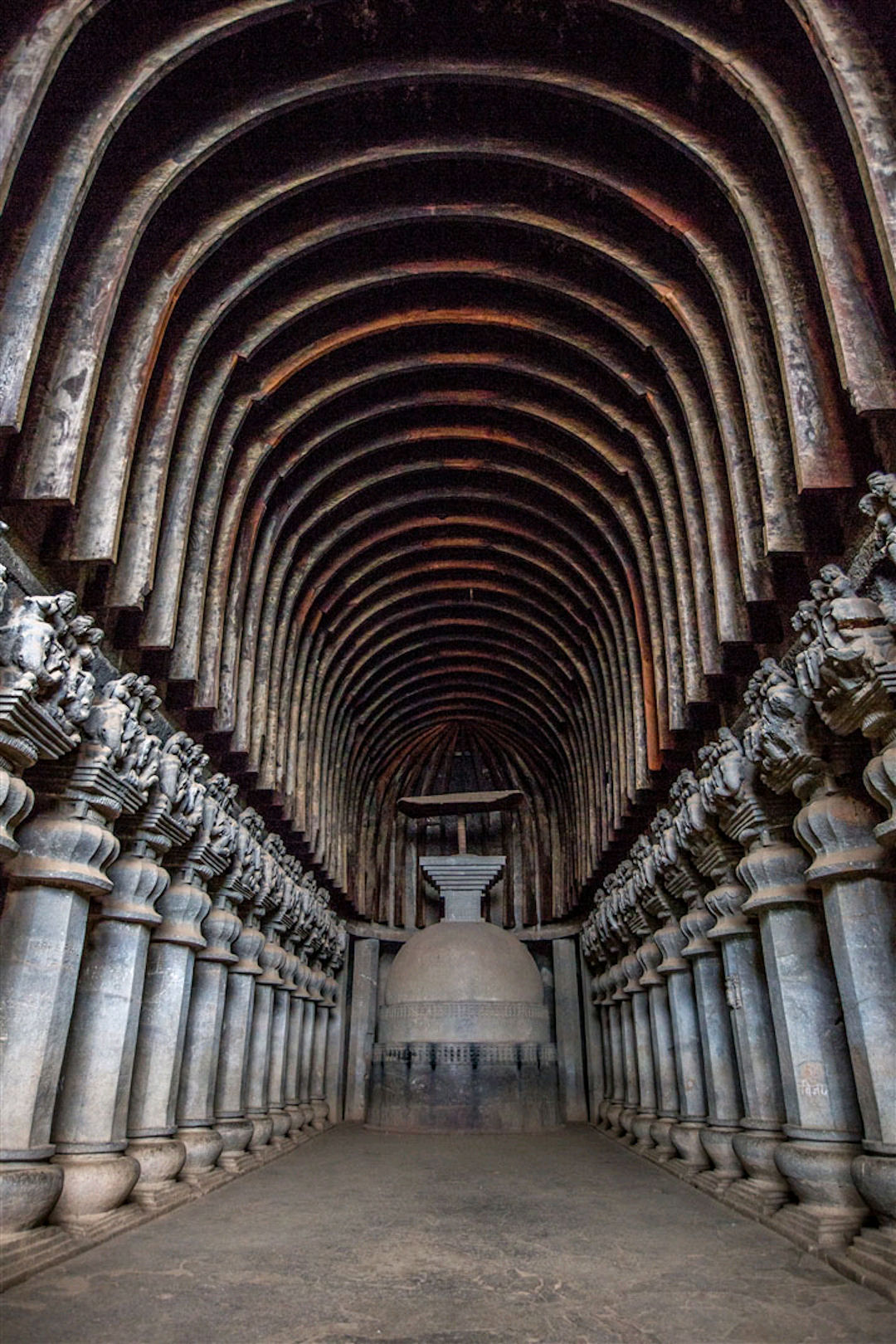
The Karla Caves are a complex of ancient Buddhist rock-cut caves near Lonavala, Maharashtra, India, hewn between the 2nd century BCE and the 5th century CE beside a major Deccan trade route. Their centrepiece is the Great Chaitya (Cave 8), completed around 120 CE, the largest and most completely preserved rock-cut chaitya (prayer hall) of its era in India, with a soaring apsidal nave, an ornate 'sun window', a lion-topped Ashokan-style pillar, and rare surviving original wooden roof ribs. An active Ekvira Devi temple now stands at the entrance. MyTripMyTravel arranges an escorted visit.
The Karla Caves are where you understand what 'rock-cut' really means. This is not a building set into a hill but an entire cathedral-scale hall carved downward and inward out of solid basalt, over 2,000 years ago, by Buddhist monks and the merchant guilds who funded them along the busy trade route inland from the Arabian Sea.
The Great Chaitya, finished around 120 CE, is the masterpiece: an apsidal prayer hall lined with carved pillars and elephant capitals, lit through a great horseshoe-shaped 'sun window', and, remarkably, still hung with fragments of the original teak roof ribs, wooden work that has survived for nearly nineteen centuries. A free-standing lion pillar in the Ashokan tradition guards the front.
MyTripMyTravel visits with a guide who reads the Hinayana Buddhist iconography and the donor inscriptions, and prepares you honestly for the practicalities: a steep flight of steps up to the caves, and an active, sometimes busy, Ekvira Devi temple that now shares the entrance.
At a glance
Karla Caves in brief
What to see
Highlights
The Great Chaitya (Cave 8)
The vast apsidal prayer hall, the finest surviving rock-cut chaitya in India.
The sun window
The great horseshoe-shaped chaitya arch that floods the nave with filtered light.
Original wooden ribs
The rare surviving teak roof ribbing, nearly nineteen centuries old.
The lion pillar
The free-standing Ashokan-style column crowned with lions at the entrance.
Elephant & couple carvings
The carved capitals and donor figures given by ancient merchant guilds.
Visitor information
Our tips
Prepare for a steep flight of steps up to the cave entrance.
Go on a weekday morning, weekends and Ekvira festival days are crowded.
A guide is essential to read the Buddhist iconography and donor inscriptions.
Pair it with the nearby Bhaja Caves for a fuller rock-cut circuit.
Good to know
Karla Caves, your questions
What are the Karla Caves?
A complex of Buddhist rock-cut caves near Lonavala, carved from the 2nd century BCE onward. The highlight is the Great Chaitya of around 120 CE, India's largest and best-preserved rock-cut prayer hall.
Why is the Great Chaitya special?
It is the finest surviving chaitya of its period, with a soaring apsidal nave, an ornate sun window, a lion pillar, and, rarely, fragments of the original wooden roof ribs still in place after nearly 1,900 years.
Is there a temple at the caves?
Yes, an active Ekvira Devi temple now stands at the cave entrance and can be very busy on festival days, which we plan around.
Is it a hard visit?
There is a steep flight of steps up to the caves. It is manageable at a steady pace, and our escort sets the timing to avoid the heat and crowds.
Visit with us
See Karla Caves, properly.
A private, chauffeured visit with a licensed expert guide, timed for the best light and the smallest crowds. We fold Karla Caves into a wider Lonavala and West India itinerary, built entirely around you.
- Skip the queue where possible, at the right hour
- Licensed local guide who brings the story to life
- Private car and chauffeur, door to door
Plan your trip
Plan a visit to Karla Caves
Free, no obligation quote. Your details stay private.