
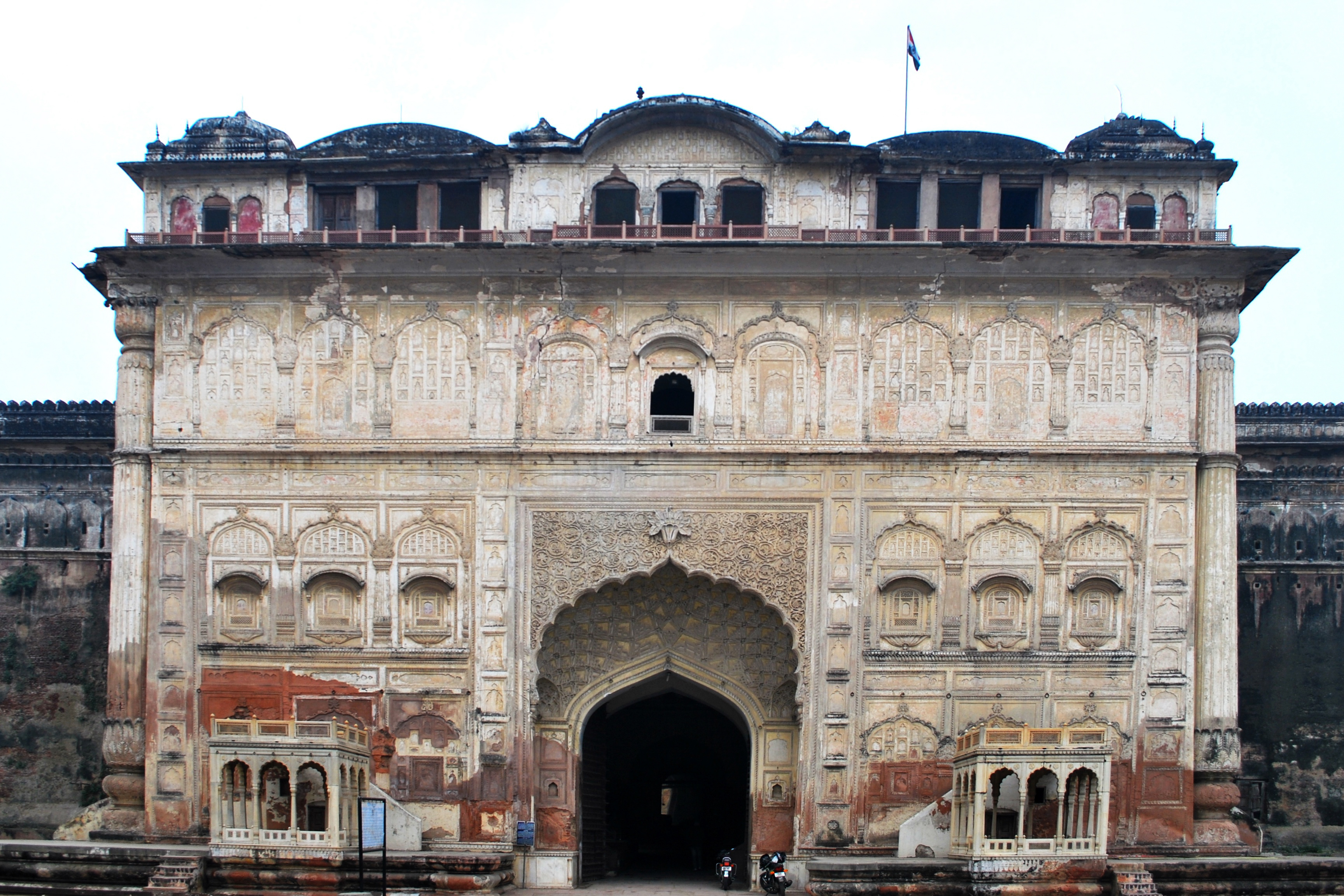
Patiala
The Royal City of the Phulkian Maharajas
Overview
Patiala is a city in Punjab, India, founded in 1763 by Baba Ala Singh of the Phulkian dynasty and the former capital of a princely state. Its heart is the vast Qila Mubarak complex, with the ornate Sheesh Mahal and its frescoes and murals; the Moti Bagh Palace, now home to the National Institute of Sports, stands nearby. Patiala lent its name to a whole style of Punjabi identity, the Patiala peg, the loose Patiala salwar, and the towering Patiala turban. It is also home to Punjabi University and the revered Gurdwara Dukh Nivaran Sahib. MyTripMyTravel runs Patiala as a chauffeured royal-heritage and Punjabi-culture day, palace circuits, a gurdwara visit, and a full Patiala table.
Patiala is Punjab's most self-consciously royal city. Founded in 1763 by Baba Ala Singh of the Phulkian dynasty, it grew into the seat of one of the region's leading princely states, and the swagger of that history still shapes it. So thoroughly did the court set the tone that Patiala's name attached itself to an entire style of Punjabi living, the generous Patiala peg of whisky, the flowing Patiala salwar, and the tall, elaborately tied Patiala turban.
The architecture backs up the reputation. The sprawling Qila Mubarak, a walled inner fort in the heart of the old city, holds the Sheesh Mahal, a palace of mirror-work, murals, and frescoes built by the Patiala rulers. The Moti Bagh Palace, one of the largest royal residences in the region, now houses the National Institute of Sports. Alongside the royal layer runs a devotional one, centred on the much-visited Gurdwara Dukh Nivaran Sahib, and an intellectual one at Punjabi University.
MyTripMyTravel runs Patiala as a well-paced day of heritage and Punjabi warmth. We circuit the Qila Mubarak and Sheesh Mahal with a guide who reads the frescoes and the dynasty's story, pay respects at Gurdwara Dukh Nivaran Sahib, and give the city's famously robust food its due. Patiala pairs easily with Chandigarh and the wider Punjab circuit as a chauffeured leg.
At a glance
Patiala in brief
When to visit
October to March
October to March is the comfortable window, with cool, clear days well suited to the palaces, gardens, and gurdwara. Winter can be genuinely cold with morning fog. The spring festival of Baisakhi (April) brings colour and crowds to Punjab. April to June is hot, often above 40°C, and the monsoon (July to September) is humid; both are workable with an air-conditioned fleet and earlier sightseeing. The Basant (kite) season in late winter adds a festive edge to the old city.
Things to do
Experiences in Patiala
Qila Mubarak complex
The great walled inner fort at the city's heart, the seat of the Patiala rulers and the anchor of any visit.
Sheesh Mahal
The 'palace of mirrors', with its frescoes, murals, and gardens built by the Patiala dynasty.
Gurdwara Dukh Nivaran Sahib
A revered and much-visited Sikh shrine, entered with covered head and bare feet, its sarovar central to pilgrims.
Moti Bagh Palace and Baradari Garden
The grand royal residence, now the National Institute of Sports, set amid the colonial-era Baradari gardens.
Old-city bazaar and Patiala turban
An escorted walk through the walled-city bazaars, including the shops that tie the famous tall Patiala pagg.
Patiala food trail
A guided tasting of the city's hearty Punjabi cooking, from lassi and street kebabs to rich curries and sweets.
Getting there
How to reach Patiala
The nearest major airport is Chandigarh (IXC), about 65 km away; we manage the chauffeured handover and transfer into Patiala.
Patiala railway station is connected to Delhi, Chandigarh, and across Punjab; we handle station transfers either side.
Patiala sits on Punjab's highway network, an easy chauffeured drive from Chandigarh (≈ 65 km) and about 250 km from Delhi.
Our GPS-tracked, orthopedic-grade vehicles handle airport and station transfers and the compact old-city circuits.
Where to stay
Restored royal-era mansions and heritage properties that echo the city's princely character.
Full-service modern hotels with spa and dining, comfortable and centrally placed for the sights.
Smaller design-led stays blending Punjabi character with contemporary comfort.
Where to eat
The city's famously generous cooking, dal makhani, butter-rich curries, tandoori kebabs, and thick sweet lassi.
An escorted trail through the walled-city bazaars for chaat, kulfi-falooda, and Patiala's celebrated sweets.
The community kitchen at Gurdwara Dukh Nivaran Sahib, experienced respectfully as an act of seva open to all.
Go deeper
More on Patiala
Good to know
Patiala, your questions
What is Patiala most famous for?
Beyond its royal palaces, the Qila Mubarak and Sheesh Mahal, Patiala lent its name to several icons of Punjabi identity: the large Patiala peg of whisky, the loose-cut Patiala salwar, and the tall, elaborately tied Patiala turban. All trace back to the flamboyant culture of its princely court.
How much time does Patiala need?
A full day, or one night, comfortably covers the Qila Mubarak, Sheesh Mahal, Gurdwara Dukh Nivaran Sahib, the Moti Bagh gardens, and the food. It pairs well with Chandigarh or a wider Punjab circuit taking in Anandpur Sahib and Amritsar.
What should I know before the gurdwara visit?
At Gurdwara Dukh Nivaran Sahib, cover your head, remove your shoes, and wash your feet at the entrance; alcohol and tobacco are not permitted. Visitors of all faiths are welcome, and our escort handles the protocol so the visit is respectful.
Is Patiala easy to combine with other Punjab destinations?
Yes. It sits close to Chandigarh and on the natural road arc through Punjab, so we frequently sequence it with Anandpur Sahib and Amritsar into a single chauffeured heritage-and-devotion route.


Plan with us
Design a private journey through Patiala.
Tell us your dates and what you love. Our travel desk builds a private, chauffeured itinerary around Patiala and the wider North India, with handpicked hotels and a transparent quote, usually within a few hours.
Related journeys
Plan your trip
Plan your Patiala trip
Free, no obligation quote. Your details stay private.