

Valley of Flowers
A UNESCO Alpine Valley of Endemic Blooms
Overview
The Valley of Flowers is a high-altitude national park in Uttarakhand's Chamoli district, Garhwal Himalaya, lying between about 3,350 and 3,650 m in the Nanda Devi Biosphere Reserve. A UNESCO World Heritage Site since 2005, it is renowned for meadows of endemic alpine flowers, Brahma Kamal, blue poppy, cobra lily, and hundreds of other species, that bloom in the monsoon months. It was brought to wider attention by the British mountaineer Frank Smythe in 1931. The park opens only from roughly June to October, allows day visits on foot only, and requires a permit. MyTripMyTravel operates it as a guided high-altitude trekking mission.
The Valley of Flowers is one of India's great natural set-pieces and one of its most conditional. Cradled between roughly 3,350 and 3,650 m in the Bhyundar valley of Garhwal, this glacial basin explodes into colour for a few short weeks each monsoon, when snowmelt and rain draw out hundreds of species of alpine flower, the sacred Brahma Kamal, the elusive blue poppy, cobra lilies, primulas, and anemones, across meadows the Pushpawati river runs through. It has been a national park since 1982 and a UNESCO World Heritage Site, within the Nanda Devi Biosphere Reserve, since 2005.
The valley reached the wider world through the British mountaineer Frank Smythe, who stumbled into it in 1931 after climbing Kamet and named it for its blooms; the botanist Joan Margaret Legge died collecting flowers here in 1939 and lies buried within the meadows. Reaching it is a commitment. The trail begins at Govindghat, climbs to the base village of Ghangaria at about 3,050 m, and continues into the valley itself, a genuine multi-day trek that shares its lower path with pilgrims walking to the Sikh shrine of Hemkund Sahib.
MyTripMyTravel runs the Valley of Flowers as an honest high-altitude mission, not a casual outing. The park opens only for a short monsoon-to-autumn window, permits are required, and it is strictly a day visit on foot, no overnight, camping, or staying inside the park, so every day means trekking in from Ghangaria and back. We time the trip to the bloom, brief thoroughly on altitude, fitness, weather, and the wet trail, and stage guides, permits, and the Garhwal logistics end to end.
At a glance
Valley of Flowers in brief
When to visit
July to August (peak bloom)
The park opens only for a short season, roughly the start of June to early October, and the flowers themselves peak in the monsoon weeks of mid-July to mid-August, when the meadows are at their most vivid, this, unusually, makes the wet season the right time to come. Expect rain, cloud, and a slick trail during those weeks; June is earlier with fewer blooms but drier, and September brings seed heads, autumn tints, and clearer air. Outside this window, roughly November to May, the valley is closed and buried in snow. Because the whole trip hinges on the bloom and the weather, we advise buffer days for rain and altitude.
Things to do
Experiences in Valley of Flowers
Valley of Flowers day trek
The core experience, a guided day walk from Ghangaria into the national park through meadows of endemic alpine flowers, returning by evening.
Govindghat to Ghangaria trek
The roughly 9 to 10 km ascent from the Govindghat roadhead to the base village of Ghangaria, the launchpad for both the valley and Hemkund.
Hemkund Sahib
The high Sikh shrine and glacial lake at about 4,300 m above Ghangaria, a steep, optional acclimatised climb of deep pilgrimage significance.
Alpine flora and photography
Close observation and photography of the valley's Brahma Kamal, blue poppy, cobra lily, and hundreds of other species with a naturalist.
Joan Margaret Legge memorial
The quiet grave of the British botanist who died here in 1939, set among the meadows she came to study.
Getting there
How to reach Valley of Flowers
Dehradun's Jolly Grant Airport (DED) is the nearest, about 290 km from Govindghat, with good domestic links; we manage the fleet handover.
Rishikesh and Haridwar are the nearest railheads, roughly 270 to 290 km away and well connected to Delhi; we handle the onward Garhwal transfer.
The chauffeured drive runs via Joshimath to the Govindghat roadhead; from there it is trek-only, with a helicopter shuttle to Ghangaria available in season through licensed operators.
Our GPS-tracked, orthopedic-grade vehicles cover the long Garhwal drive to Govindghat; the valley itself is reached entirely on foot with a guide and permit.
Where to stay
The simple lodges and guesthouses at the base village of Ghangaria, basic but the only overnight option near the trailhead, booked ahead in season.
More equipped hotels at Joshimath, lower down, used as the staging comfort base before and after the trek.
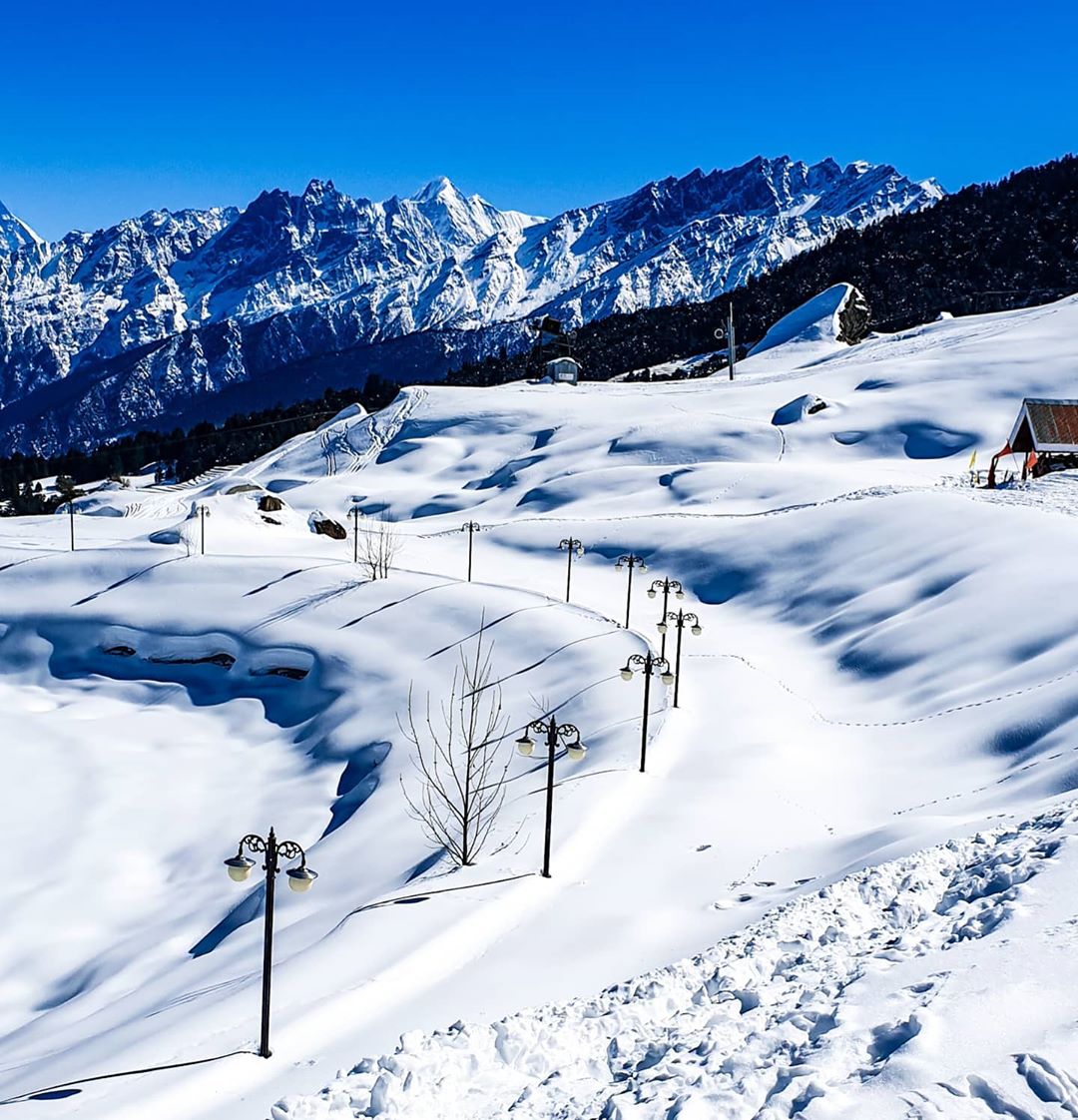
Higher-comfort resorts at nearby Auli to bookend the trek with recovery, spa, and meadow views.
Where to eat
Dining at the base village is simple and warming, dal, rice, roti, thukpa, and hot chai to fuel the day treks; there is no food inside the park.
Regional dishes such as mandua roti, jhangora, and gahat dal at valley lodges lower down the route.
As the valley is day-use only with no facilities inside, we arrange packed water and provisions for the trek in and out.
Go deeper
More on Valley of Flowers
Ready to book
Itineraries featuring Valley of Flowers
Private, chauffeured, day-by-day journeys that feature Valley of Flowers or explore the wider North India, each fully customisable, or built around your dates.
All tour itineraries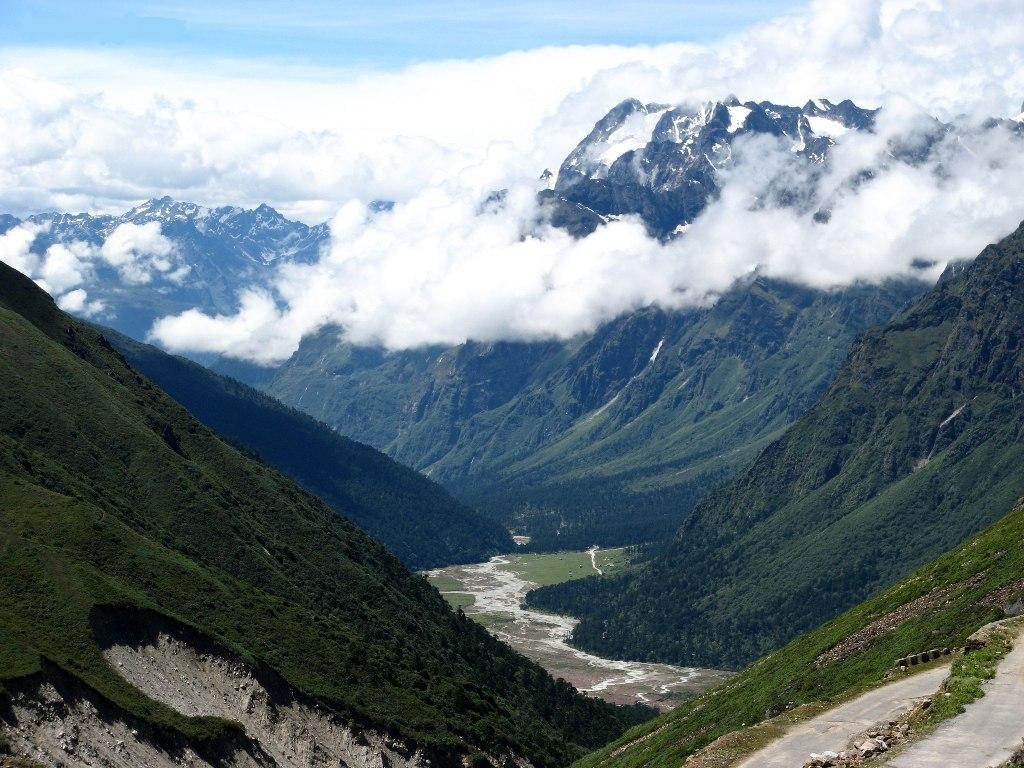
Good to know
Valley of Flowers, your questions
When does the Valley of Flowers open, and when do the flowers bloom?
The park opens only for a short season, roughly June to early October, and the flowers peak in the monsoon weeks of mid-July to mid-August. Outside that window it is closed and snowbound. We time the trip to the bloom while buffering for monsoon weather.
Can I stay overnight inside the valley?
No. The Valley of Flowers is strictly a day-visit national park with no camping, lodging, or overnight stays inside; visitors must enter and return on foot the same day. The base for nights is Ghangaria village, and we build the trek around that.
How difficult is the trek and do I need to be fit?
It is a genuine high-altitude trek, around 9 to 10 km up to Ghangaria, then several more into the valley each day, between roughly 3,000 and 3,650 m, often on a wet monsoon trail. Reasonable fitness and acclimatisation are essential, and we brief thoroughly and stage guides.
Do I need a permit, and can I combine it with Hemkund Sahib?
Yes, an entry permit is required for the national park, which we arrange. Many visitors also climb from Ghangaria to the Sikh shrine of Hemkund Sahib at about 4,300 m on a separate day; it is steep and high, and we plan it with acclimatisation.
Continue exploring
Pairs well with Valley of Flowers


Plan with us
Design a private journey through Valley of Flowers.
Tell us your dates and what you love. Our travel desk builds a private, chauffeured itinerary around Valley of Flowers and the wider North India, with handpicked hotels and a transparent quote, usually within a few hours.
Related journeys
Plan your trip
Plan your Valley of Flowers trip
Free, no obligation quote. Your details stay private.