
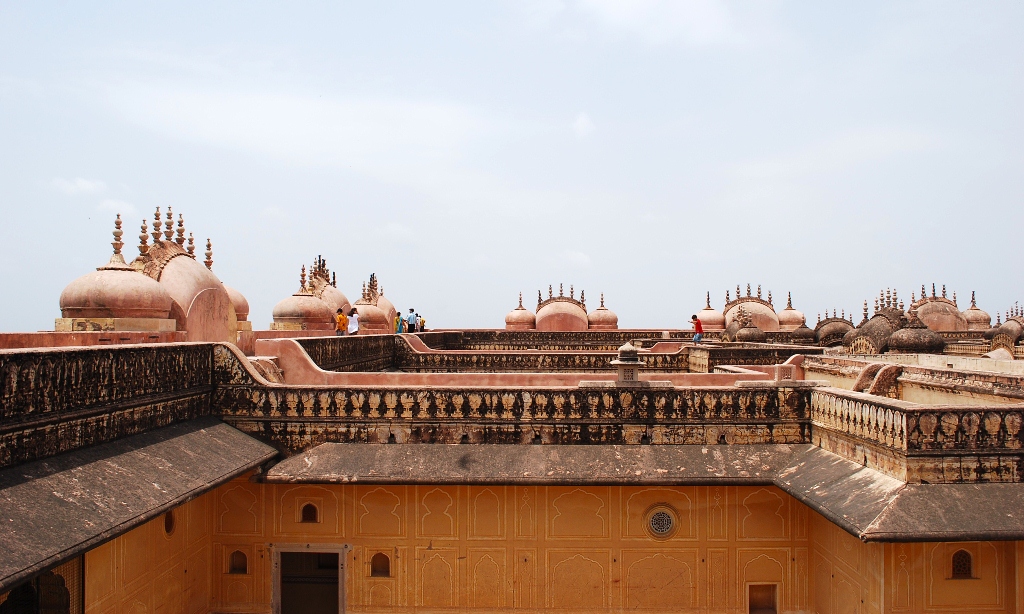
Nahargarh Fort
The Sunset Fort Over the Pink City
Overview
Nahargarh Fort crowns the Aravalli hills on the northern edge of Jaipur, India, built in 1734 by Maharaja Sawai Jai Singh II and originally named Sudarshangarh. With Amer and Jaigarh it formed the defensive ring around the city. Its name, 'abode of tigers', is tied to the warrior-spirit Nahar Singh Bhomia, whose shrine still stands inside. The chief attraction is Madhavendra Bhawan, a palace of interconnected suites built for the king and his queens. Nahargarh is best known today for its sweeping sunset views over the Pink City. MyTripMyTravel times it for the golden hour over Jaipur.
Nahargarh is where you go to see the whole of Jaipur at once. Built into the Aravalli ridge on the city's northern edge, it was one of three forts, with Amer and Jaigarh, that once guarded the Kachhwaha capital, and it still delivers the definitive panorama of the Pink City.
Sawai Jai Singh II raised it in 1734 as Sudarshangarh; the name it carries now, 'abode of tigers', is bound up with the legend of Nahar Singh Bhomia, a warrior whose restless spirit is said to have obstructed the building until a shrine was raised inside to appease him. That shrine remains.
Its architectural set-piece is Madhavendra Bhawan, a later palace of identical suites for the ruler and his queens, linked by corridors so the king could move between them unseen. MyTripMyTravel times the fort for sunset, when the city below turns gold and the ramparts empty of day-trippers.
At a glance
Nahargarh Fort in brief
What to see
Highlights
Madhavendra Bhawan
A palace of matching suites for the king and his queens, linked by corridors so he could visit any unseen.
The Jaipur panorama
The definitive sunset view across the entire Pink City from the ramparts.
Nahar Singh Bhomia shrine
The temple raised to appease the warrior-spirit the fort is named for.
The ridge defences
Walls tied along the Aravallis to Jaigarh, part of Jaipur's fortified ring.
Wax museum & Sheesh Mahal
A modern attraction within the fort, on a separate ticket.
Visitor information
Our tips
Come for sunset, the city-wide golden-hour panorama is the reason to make the climb.
The wax museum and Sheesh Mahal need a separate ticket; skip unless you want a modern add-on.
Pair with Jaigarh along the ridge, or with a walled-city morning below.
An expert guide unpacks the Nahar Singh legend and the queens' palace.
Good to know
Nahargarh Fort, your questions
What is the best time to visit Nahargarh?
Sunset, the fort gives the finest panorama of Jaipur, and the light over the Pink City at golden hour is the standout experience. We time our visit for it.
Why is it called Nahargarh?
The name means 'abode of tigers' and is linked to Nahar Singh Bhomia, a warrior whose spirit is said to have obstructed construction until a shrine was built inside to pacify him.
Who built the fort and when?
Maharaja Sawai Jai Singh II built it in 1734, originally naming it Sudarshangarh; it was extended in 1868.
What is Madhavendra Bhawan?
A palace within the fort of identical suites for the ruler and his queens, connected by corridors so the king could visit any of them unseen.
How does it fit a Jaipur itinerary?
As a late-afternoon and sunset stop, often paired with Jaigarh along the same ridge, we sequence them together.
More in Jaipur
Visit with us
See Nahargarh Fort, properly.
A private, chauffeured visit with a licensed expert guide, timed for the best light and the smallest crowds. We fold Nahargarh Fort into a wider Jaipur and Golden Triangle itinerary, built entirely around you.
- Skip the queue where possible, at the right hour
- Licensed local guide who brings the story to life
- Private car and chauffeur, door to door
Plan your trip
Plan a visit to Nahargarh Fort
Free, no obligation quote. Your details stay private.