
Kanha
Sal Forests & the Barasingha's Home
Overview
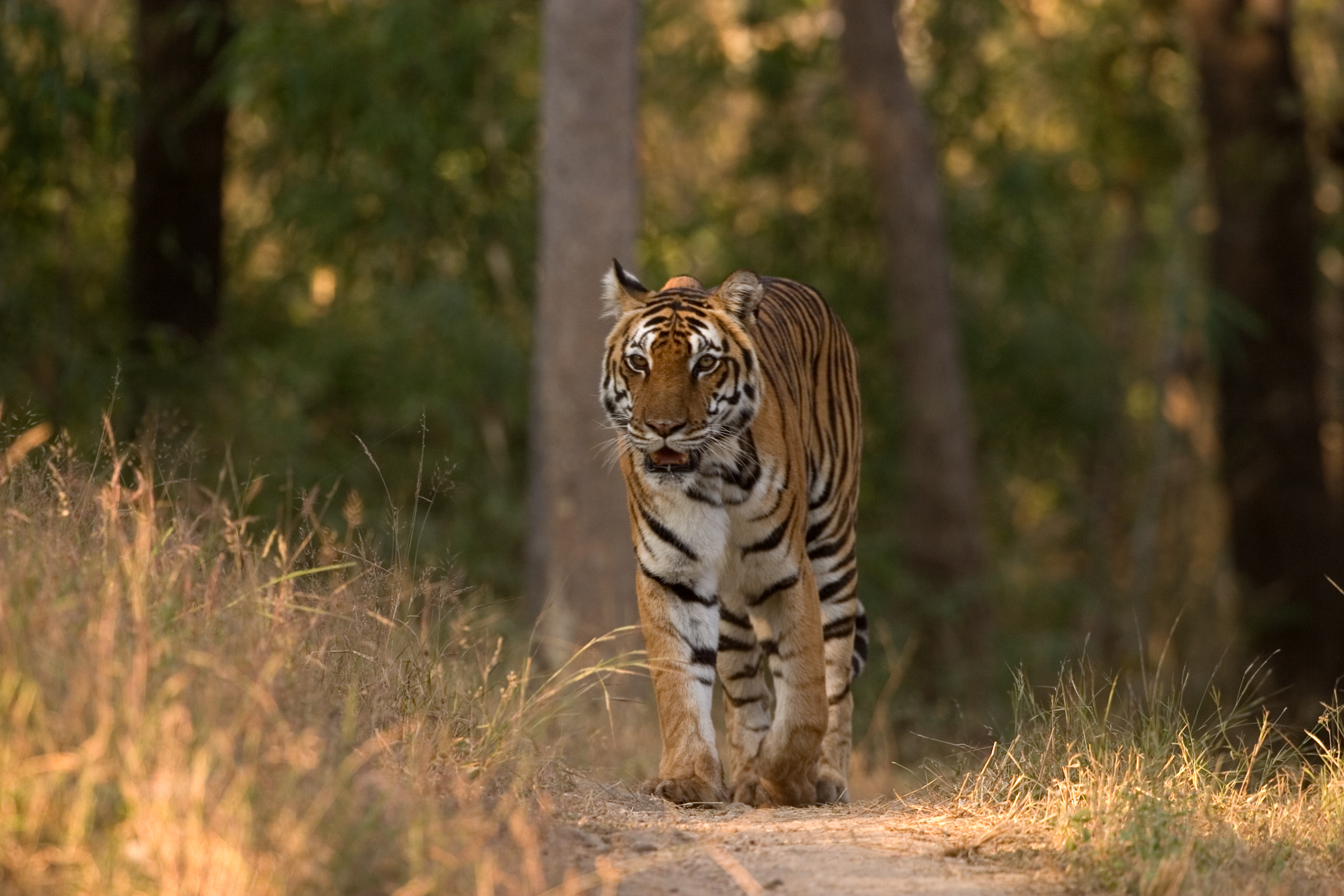
Kanha is one of India's largest and finest tiger reserves, spread across the Mandla and Balaghat districts of Madhya Pradesh, central India. A landscape of sal forest, bamboo, and open grassy meadows, it is a Project Tiger reserve celebrated for saving the hard-ground barasingha (swamp deer) from extinction, its emblem animal. The forests are widely associated with Rudyard Kipling's 'The Jungle Book'. Bengal tiger, leopard, gaur, dhole, and rich birdlife are all present, though tiger sightings are never guaranteed. Kanha's core zones close during the monsoon. MyTripMyTravel runs it with premium lodges and expert-guided safaris from the Jabalpur gateway.
Kanha is central India's classic tiger forest, a vast reserve of sal and bamboo woodland broken by wide grassy maidans, so open and lyrical in places that it is often cited among the landscapes that inspired Kipling's 'Jungle Book'. It is a founding Project Tiger reserve and one of the best-managed protected areas in the country.
Its greatest conservation story is the barasingha, the hard-ground swamp deer found almost nowhere else, which Kanha brought back from the edge of extinction, the animal is the park's proud emblem. Beyond the tiger, the reserve holds leopard, the massive gaur, packs of dhole (Indian wild dog), sambar, chital, and a long bird list. Game drives run through zones such as Kanha, Kisli, Mukki, and Sarhi, each with its own character of meadow and forest. It is important to be honest: this is genuine wilderness and tigers roam free, so sightings are a matter of patience and luck, never a certainty, the forest itself is the reward.
MyTripMyTravel runs Kanha as a proper wilderness experience, not a rushed drive-through. We pair premium forest-edge lodges with expert naturalists, secure the permits and zone allocations in advance, and build the days around the rhythm of the animals, early starts, unhurried drives, and time to read the forest.
At a glance
Kanha in brief
When to visit
October to June (park open)
Kanha's core zones are open from around mid-October to the end of June and closed through the monsoon. The cool October to March months are the most comfortable, with pleasant drives and lush post-monsoon forest. The hot months of April to June, though demanding, often bring the best tiger sightings as animals concentrate around shrinking waterholes. Note the core reserve closes roughly from 1 July to 15 October for the monsoon, when only limited buffer zones may operate. Sightings are never guaranteed in any season.
Things to do
Experiences in Kanha
Morning jeep safari
The prime game drive at dawn through sal forest and meadow, when the reserve is most active.
Barasingha grasslands
The open maidans where the hard-ground swamp deer, saved here from extinction, still graze.
Afternoon safari & birding
A second drive for predators and Kanha's rich birdlife across different zones.
Naturalist forest interpretation
Reading tracks, alarm calls, and forest signs with an expert guide, the real skill of the jungle.
Kipling landscape
Time in the forests widely tied to 'The Jungle Book', among India's most atmospheric wilderness.
Lodge wellness downtime
Spa and quiet hours between drives at the forest-edge lodges, arranged through our wellness wing.
Getting there
How to reach Kanha
The nearest airport is Jabalpur (JLR), about 160 km and 4 to 5 hours by road; Raipur and Nagpur are alternative gateways.
The chauffeured leg from Jabalpur runs through rural central India to the park gates; we time it for daylight arrival.
Jabalpur and Gondia are the practical railheads; we handle the onward road transfer to the reserve.
Our GPS-tracked, orthopedic-grade vehicles cover the transfer from Jabalpur and link Kanha with Pench or Bandhavgarh.
Where to stay
Premium forest-edge lodges with pools, spa, and resident naturalists near the main gates.
Smaller character camps with a more intimate, nature-forward atmosphere close to the buffer.
Well-run mid-scale resorts for guests keeping the wilderness leg simpler.
Where to eat
Most meals are taken at the lodges, buffet and plated menus built around early safari timings, arranged with the property.
A hamper breakfast during or after the morning drive, coordinated with your naturalist and lodge.
A central-Indian thali of local dishes at the lodge, via our dining wing.
Go deeper
More on Kanha
Good to know
Kanha, your questions
Will I definitely see a tiger at Kanha?
No, and any honest operator will say so. Kanha has a healthy tiger population, but this is free-ranging wilderness and sightings depend on luck, season, and patience. We maximise your chances with multiple drives and top naturalists, but never promise a sighting.
When is Kanha open?
The core zones run roughly mid-October to the end of June and close for the monsoon, approximately 1 July to 15 October, when only limited buffer areas may operate. We plan trips within the open window.
What is the barasingha?
The hard-ground swamp deer, Kanha's emblem, which the reserve brought back from near-extinction. Seeing the herds on the open meadows is one of the park's signature experiences, distinct from the tiger.
How many nights should I plan?
Two to three nights, giving three to five safaris. Wildlife rewards repetition, more drives mean better odds and a deeper feel for the forest than a single hurried visit.
How do I reach Kanha?
Usually by flight into Jabalpur (JLR), then a chauffeured drive of about 160 km to the gates. Raipur and Nagpur are alternatives, and we can link Kanha by road with Pench or Bandhavgarh.
Continue exploring
Pairs well with Kanha


Plan with us
Design a private journey through Kanha.
Tell us your dates and what you love. Our travel desk builds a private, chauffeured itinerary around Kanha and the wider Central India, with handpicked hotels and a transparent quote, usually within a few hours.
Related journeys
Plan your trip
Plan your Kanha trip
Free, no obligation quote. Your details stay private.