
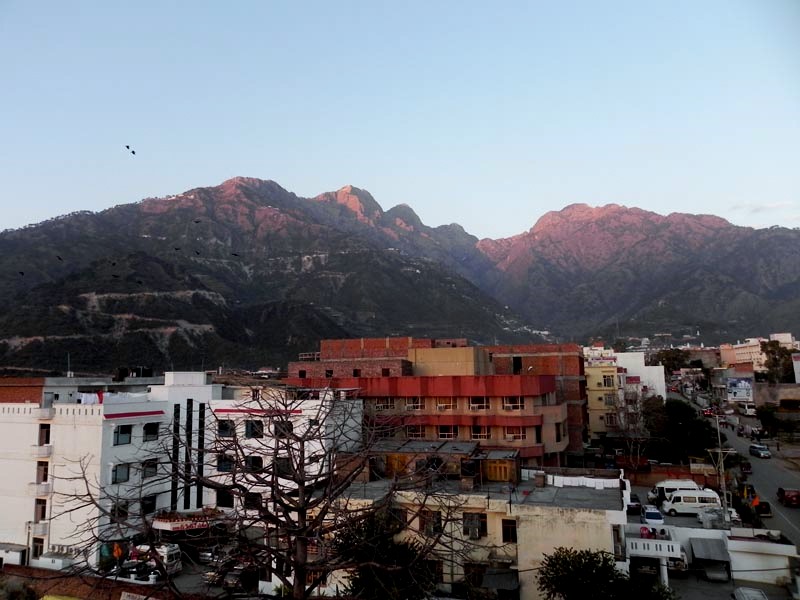
Katra (Vaishno Devi)
Base Camp to the Mother Goddess
Overview
Katra is a town in the Reasi district of Jammu & Kashmir, India, and the base camp for the pilgrimage to the Vaishno Devi shrine, one of the most visited Hindu temples in the country. The cave shrine of Mata Vaishno Devi sits at about 1,584 m in the Trikuta Mountains, reached by a roughly 12 km uphill track from Katra that pilgrims cover on foot, by pony, palki, battery-operated car, ropeway, or helicopter. Managed by the Shri Mata Vaishno Devi Shrine Board, the yatra draws millions each year and peaks during Navratri. MyTripMyTravel arranges registered access, comfortable Katra stays, and a chauffeured base for the climb.
Katra exists almost entirely to serve one of India's greatest pilgrimages. The small Himalayan foothill town is where the journey to Vaishno Devi begins: the revered cave shrine of the Mother Goddess, tucked into the Trikuta range above, which draws millions of devotees every year and ranks among the busiest Hindu temples anywhere. For most visitors, Katra is not a sightseeing stop but a launch point, a place to rest, register, and set out.
The shrine itself is not something you simply drive to. From Katra it is an uphill track of roughly twelve kilometres to the Bhawan at about 1,584 metres, and how you cover it is the defining decision of the trip. Fit pilgrims walk; others take ponies, hand-carried palkis, or the battery-operated cars that run parts of the route. A helicopter service flies from Katra up to Sanjichhat, cutting most of the climb, and a ropeway links the Bhawan to the higher Bhairavnath temple. None of it is optional scenery, the ascent is the pilgrimage.
Because the yatra is tightly managed and often crowded, MyTripMyTravel treats Katra as a logistics exercise as much as a spiritual one. We handle the mandatory shrine-board registration and RFID cards, secure a comfortable base in town, advise honestly on the trek versus helicopter or battery-car options for each guest's fitness, and chauffeur the Jammu to Katra leg so the day of the climb starts calm and unhurried.
At a glance
Katra (Vaishno Devi) in brief
When to visit
March to October
The shrine is open year-round, and the trek can be walked in any season, but March to October offers the most comfortable conditions on the ascent. Summer in Katra town is warm but the higher track stays pleasant, while winters can be cold with occasional snow and mist around the Bhawan and Bhairavnath. The Navratri festivals in spring and autumn are the spiritual high points, drawing enormous crowds that require long-lead planning. We generally avoid peak weekends and public holidays, favouring weekday starts and early-morning climbs for a calmer darshan.
Things to do
Experiences in Katra (Vaishno Devi)
Vaishno Devi cave shrine
The revered darshan of the Mother Goddess in her natural cave shrine at the Bhawan, the reason the entire yatra exists.
The Trikuta trek to Bhawan
The roughly 12 km paved uphill track from Katra through Banganga and Charan Paduka, walked, ridden, or eased by battery car.
Bhairavnath temple & ropeway
The higher shrine of Bhairon Baba above the Bhawan, reached on foot or by the modern ropeway, traditionally completing the pilgrimage.
Ardhkuwari & Garbhjoon
The midway cave shrine on the older route, where pilgrims pause at the narrow Garbhjoon passage on the climb.
Helicopter to Sanjichhat
A short flight from Katra to Sanjichhat that skips most of the ascent, leaving a gentler final stretch to the Bhawan.
Charan Paduka viewpoints
The resting terraces along the track with sweeping views back over Katra town and the Reasi valley below.
Getting there
How to reach Katra (Vaishno Devi)
Jammu Airport (IXJ) is about 48 km away and is the practical gateway, with a chauffeured transfer up to Katra on arrival.
Shri Mata Vaishno Devi Katra station (SVDK) is a purpose-built terminus in the town itself, served by direct trains including from Delhi and now connected onward toward the Kashmir Valley.
Katra lies about 48 km from Jammu, a roughly 1.5-hour drive; the town is the road-head, beyond which the shrine is reached only by track.
Our air-conditioned fleet covers the Jammu to Katra leg and onward links to Patnitop and Srinagar, with chauffeurs who manage timing around the climb.
Where to stay
The better hotels in Katra town, close to the yatra registration and the base of the track, for an easy pre-dawn start to the climb.
Clean, functional yatri niwas and bhawan accommodation run by the shrine board along the route, for pilgrims who want to stay close to the darshan.
For guests preferring a fuller-service base, upscale hotels in Jammu city, 48 km away, with a chauffeured day-run to Katra.
Where to eat
Katra is a predominantly vegetarian and alcohol-free pilgrim town; simple, wholesome thalis of rajma-chawal, dal, and roti are the staple.
Hygienic, subsidised vegetarian canteens and langar along the track, serving hot meals and tea to climbing pilgrims.
Kadhi-chawal, chole, parathas, and thick lassi from the dhabas and cafés around the Katra bus stand and market.
Go deeper
More on Katra (Vaishno Devi)
Good to know
Katra (Vaishno Devi), your questions
What is Katra known for?
Katra is the base town for the pilgrimage to the Vaishno Devi cave shrine in the Trikuta Mountains, one of the most visited Hindu temples in India. Almost everyone who comes to Katra is here to make the yatra to the Mother Goddess.
How do you reach the Vaishno Devi shrine?
The shrine sits about 12 km uphill from Katra and cannot be driven to. Pilgrims cover the track on foot, by pony, by palki, or by battery-operated car, while a helicopter service flies to Sanjichhat and a ropeway links the Bhawan to the higher Bhairavnath temple.
Can I avoid the long walk?
Largely, yes. A helicopter from Katra to Sanjichhat skips most of the climb, battery-operated cars run sections of the route, and ponies or palkis carry those who cannot walk, but a short final stretch on foot usually remains. We match the option to each guest's fitness.
How many days do I need at Katra?
One to two nights is typical: an evening to register and rest, an early start for the climb and darshan, and time to descend without rushing. Peak festival periods warrant extra buffer for crowds.
Do I need to register for the yatra?
Yes. The Shri Mata Vaishno Devi Shrine Board requires yatra registration and issues RFID access cards. Our planners arrange this in advance so guests are not held up at the entry counters in Katra.
When is the best time to visit?
March to October gives the most comfortable trekking conditions. Winters are cold with occasional snow near the shrine, and the spring and autumn Navratri festivals are spiritually intense but very crowded and need advance planning.
Continue exploring
Pairs well with Katra (Vaishno Devi)


Plan with us
Design a private journey through Katra (Vaishno Devi).
Tell us your dates and what you love. Our travel desk builds a private, chauffeured itinerary around Katra (Vaishno Devi) and the wider North India, with handpicked hotels and a transparent quote, usually within a few hours.
Plan your trip
Plan your Katra (Vaishno Devi) trip
Free, no obligation quote. Your details stay private.