
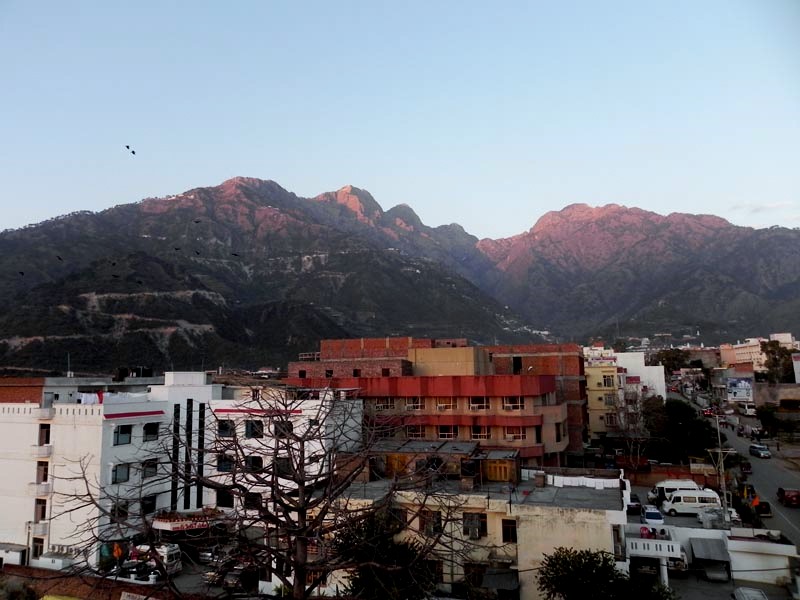
Katra (Vaishno Devi) · 3-day plan
3-Day Katra (Vaishno Devi) Itinerary
The brief
A 3-day Katra (Vaishno Devi), Jammu & Kashmir itinerary by MyTripMyTravel is a high-efficiency sprint sequenced from real city data, headline heritage at its best hour, deliberate rest, vetted dining, and the chauffeured Elite Fleet handling logistics. The March to October window is optimal; pacing adjusts outside it. Recommended stay tier Katra premium tier. The plan is a starting architecture, refined to your party during planning.
A 3-day Katra (Vaishno Devi) itinerary is a tight, headlines-only plan, the essential heritage, one signature moment, and a careful sequence so the days are spent on experience rather than transitions. We use it when Katra (Vaishno Devi) is a single leg in a wider Indian trip.
The principle is the same across every length: one signature moment per day, not three; rest engineered in rather than apologised for; logistics invisible to the guest. Everything below is sequenced into a private, chauffeured, escorted mission, never a shared coach.
Day by day
Arrival & Katra (Vaishno Devi) orientation
Chauffeured arrival into Katra (Vaishno Devi) via Jammu Airport (IXJ) is about 48 km away and is the practical gateway, with a chauffeured transfer up to Katra on arrival. After settling at the curated stay, an unhurried orientation walk or drive frames the city, base camp to the mother goddess, and absorbs travel fatigue without losing daylight.
An early dinner at a vetted heritage table eases the time-shift; we keep day one deliberately light. The full sightseeing protocol begins day two, when the body is on local time.
Vaishno Devi cave shrine, the headline
The first full day is reserved for Vaishno Devi cave shrine, with escorted access at the best hour. The revered darshan of the Mother Goddess in her natural cave shrine at the Bhawan, the reason the entire yatra exists..
A midday return to the stay for lunch and rest, then a softer afternoon, a curated walk, a viewpoint timed for the late light, and a vetted dinner. The day is structured around one signature moment rather than three rushed ones.
The Trikuta trek to Bhawan & deeper Katra (Vaishno Devi)
The Trikuta trek to Bhawan: The roughly 12 km paved uphill track from Katra through Banganga and Charan Paduka, walked, ridden, or eased by battery car..
For a 3-day stay, this is the final day, onward transit or departure tomorrow morning. We compress the must-sees into the morning so the afternoon has room for a second look at the favourite.
Trip context
When to travel
Optimal: March to October. The shrine is open year-round, and the trek can be walked in any season, but March to October offers the most comfortable conditions on the ascent. Summer in Katra town is warm but the higher track stays pleasant, while winters can be cold with occasional snow and mist around the Bhawan and Bhairavnath. The Navratri festivals in spring and autumn are the spiritual high points, drawing enormous crowds that require long-lead planning. We generally avoid peak weekends and public holidays, favouring weekday starts and early-morning climbs for a calmer darshan.
Where to stay across the trip
Katra premium tier: The better hotels in Katra town, close to the yatra registration and the base of the track, for an easy pre-dawn start to the climb. Shrine-board tier: Clean, functional yatri niwas and bhawan accommodation run by the shrine board along the route, for pilgrims who want to stay close to the darshan. Jammu luxury tier: For guests preferring a fuller-service base, upscale hotels in Jammu city, 48 km away, with a chauffeured day-run to Katra.
Tier is matched to the kind of trip rather than a price ladder. A celebration leans to the top tier; a recovery or wellness stay leans to the calmer tier; a city-base for regional extension prioritises practicality.
Onward & continuity
Katra (Vaishno Devi) is rarely the whole trip, it is a node in the North India. The same chauffeured fleet continues seamlessly into the wider circuit (Patnitop, Srinagar and Gulmarg). Inter-leg permits and timing are handled before you travel.
Good to know
3-day Katra (Vaishno Devi) FAQ
Is a 3-day Katra (Vaishno Devi) itinerary enough?
Three days is a tight, headlines-only stay, enough for the essential experiences if you accept a compressed pace. Five to seven days is more comfortable for Katra (Vaishno Devi).
When is the best time for a 3-day Katra (Vaishno Devi) trip?
March to October. The shrine is open year-round, and the trek can be walked in any season, but March to October offers the most comfortable conditions on the ascent. Summer in Katra town is warm but the higher track stays pleasant, while winters can be cold with occasional snow and mist around the Bhawan and Bhairavnath. The Navratri festivals in spring and autumn are the spiritual high points, drawing enormous crowds that require long-lead planning. We generally avoid peak weekends and public holidays, favouring weekday starts and early-morning climbs for a calmer darshan.
Can the 3-day plan be customised?
Entirely. Every itinerary below is a starting architecture; we adjust days, hotels, and stops to your party while holding the 3-day rhythm.
Is the itinerary private?
Always, a single party with a dedicated chauffeur on the GPS-tracked Elite Fleet protocol, escorted access at monuments. Never a shared group departure.
Plan with us
Plan your 3-day Katra (Vaishno Devi) trip
Private, chauffeured travel with this 3-day Katra (Vaishno Devi) plan tuned to your pace. Tell us your dates and party size, and we reply with a tailored itinerary and a transparent quote.
Plan your trip
Plan your 3-day Katra (Vaishno Devi) trip
Free, no obligation quote. Your details stay private.