
Lonar
A Lake in a Meteorite Crater
Overview
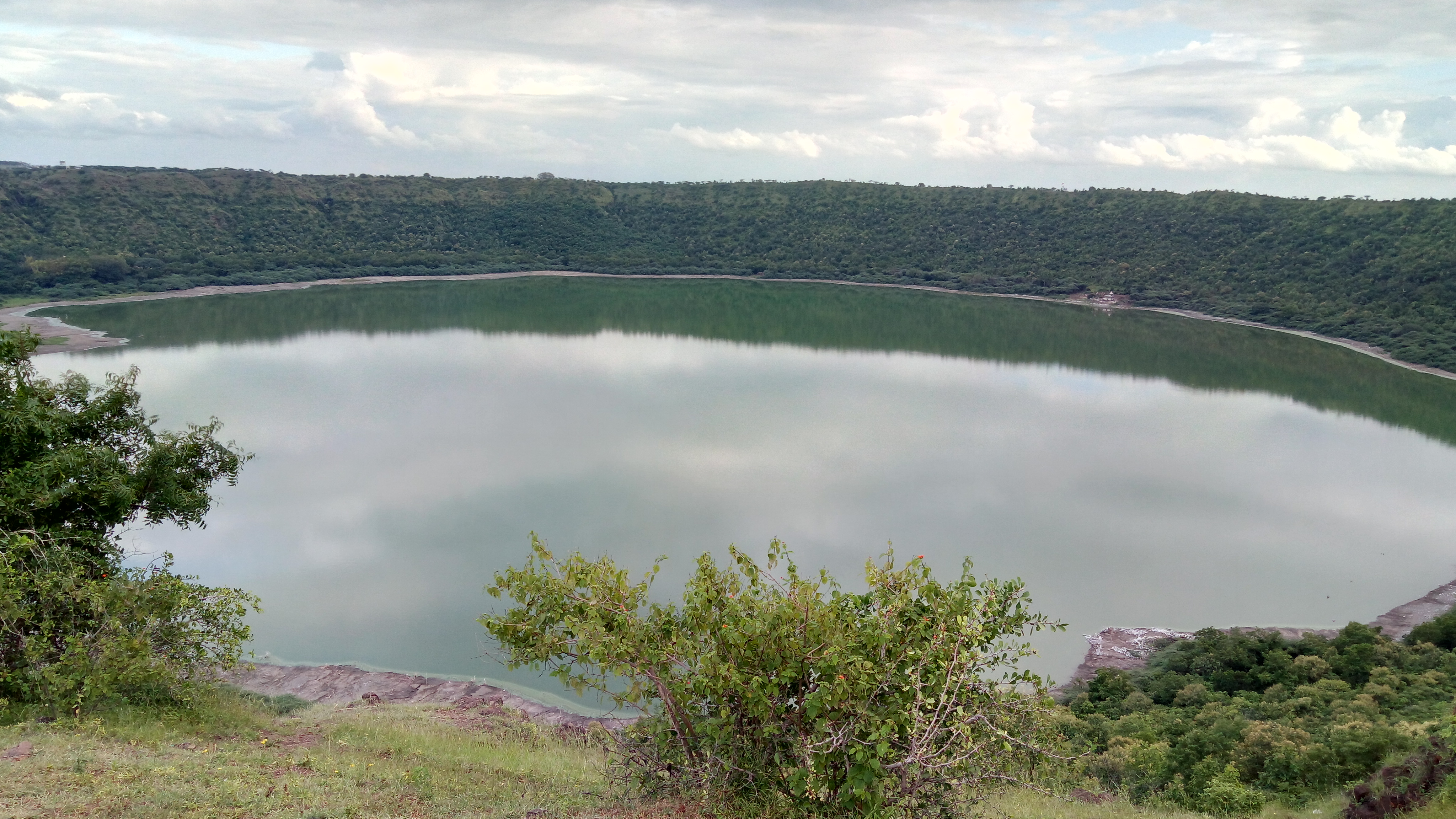
Lonar, in Maharashtra's Buldhana district, holds a lake that fills a crater formed by a meteorite impact into the Deccan basalt tens of thousands of years ago. The lake is both saline and alkaline, which makes its water chemistry and microbial life a subject of scientific study. Ancient Hindu temples ring the crater rim and its wooded slopes. In 2020 it was designated a Ramsar wetland of international importance. MyTripMyTravel treats Lonar as an offbeat nature-and-science detour for travellers curious about India beyond the usual circuit.
The crater is one of relatively few well-preserved impact craters formed in basalt rock anywhere in the world, which is part of why geologists have long taken an interest in it. Estimates of its age vary across studies, generally running into the tens of thousands of years.
The lake at the bottom is unusual for being both salty and alkaline at once, and its distinctive water supports specialised microbes. A wooded slope descends from the rim to the water, and the walk down is the main way to appreciate the scale of the bowl.
Scattered around the rim and lower slopes are old Hindu temples, several in ruins, which add a layer of heritage to what is chiefly a natural wonder. Lonar is remote, and MyTripMyTravel plans it as a considered detour rather than a quick stop.
At a glance
Lonar in brief
When to visit
October to February
The cooler months are best for the descent to the lake and the walk around the rim, both of which involve exposure to the sun. The monsoon greens the crater slopes attractively but makes the paths slippery. Early morning is ideal for birdlife on the water and for softer light across the bowl before the day heats up.
Things to do
Experiences in Lonar
Crater rim walk
A circuit around the rim gives the fullest sense of the crater's near-circular bowl and the lake within it.
Descent to the lake
A forested path leads down to the water's edge, where the unusual saline-alkaline chemistry is most apparent.
Daityasudan Temple
An old carved temple in Lonar town, associated with local legend surrounding the crater.
Rim-side temple ruins
Several weathered shrines sit on the slopes, adding a heritage dimension to the geology.
Birdwatching
The wetland attracts a range of birds, and the quiet crater floor is a rewarding spot at dawn.
Getting there
How to reach Lonar
Aurangabad (IXU) is the more usable airport for reaching Lonar, followed by a long road transfer; Nagpur is a farther alternative.
The nearest convenient railheads are at Jalna and Malkapur, both requiring onward road travel to the crater.
Lonar is reached by road from Aurangabad or Buldhana; the final approach runs through rural Vidarbha countryside.
MyTripMyTravel arranges a chauffeured run from Aurangabad, given the site's distance from major transport hubs.
Where to stay
The MTDC resort near the rim is the most convenient overnight, letting visitors catch the crater at dawn.
Aurangabad, several hours away, offers fuller hotel comfort for those not wishing to stay in Lonar itself.
Basic lodging in Lonar town suits travellers prioritising an early start over amenities.
Where to eat
The government resort offers straightforward meals, the most reliable option close to the crater.
Simple local restaurants serve basic vegetarian Maharashtrian fare in the town.
Given the remote setting, MyTripMyTravel can arrange packed provisions for day visitors.
Good to know
Lonar, your questions
How was the Lonar crater formed?
It was created by a meteorite impact into the basaltic rock of the Deccan Traps. It is one of the few well-studied impact craters formed in basalt, which is why it draws scientific attention.
How old is the crater?
Age estimates vary between studies and generally run into the tens of thousands of years. Rather than cite a single disputed figure, it is fair to describe it simply as very ancient.
Why is the lake water unusual?
The lake is both saline and alkaline, an uncommon combination that supports specialised microbial life and has made it a focus of research.
Is Lonar easy to reach?
No, it is fairly remote. It is best approached by road from Aurangabad, so MyTripMyTravel plans it as a deliberate detour with an overnight rather than a rushed visit.


Plan with us
Design a private journey through Lonar.
Tell us your dates and what you love. Our travel desk builds a private, chauffeured itinerary around Lonar and the wider West India, with handpicked hotels and a transparent quote, usually within a few hours.
Related journeys
Plan your trip
Plan your Lonar trip
Free, no obligation quote. Your details stay private.