
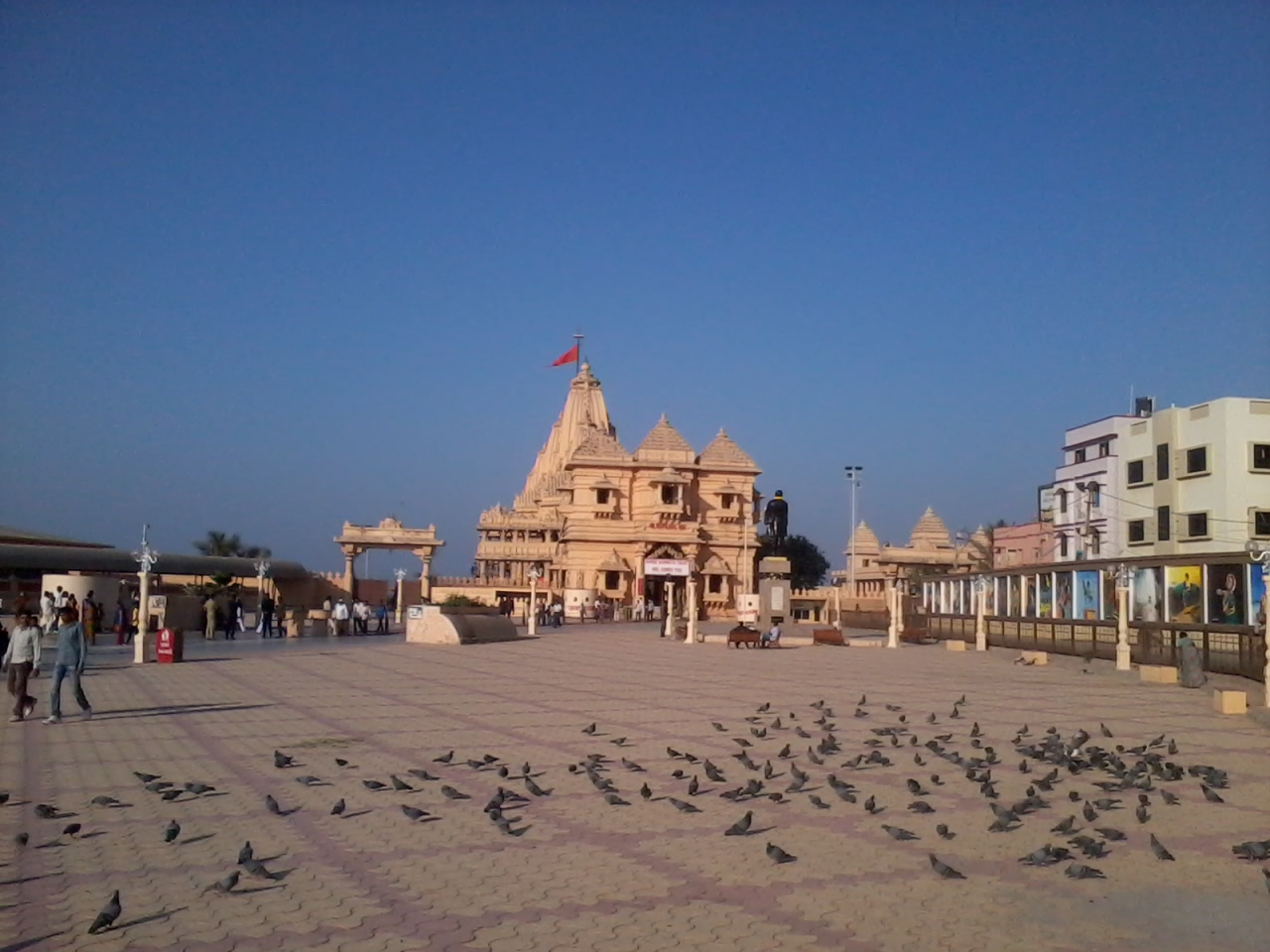
Somnath · 10-day plan
10-Day Somnath Itinerary
The brief
A 10-day Somnath, Gujarat itinerary by MyTripMyTravel is a deep dive + regional extension sequenced from real city data, headline heritage at its best hour, deliberate rest, vetted dining, and the chauffeured Elite Fleet handling logistics. The November to February window is optimal; pacing adjusts outside it. Recommended stay tier Sea-view tier. The plan is a starting architecture, refined to your party during planning.
A 10-day Somnath itinerary covers the city deeply and extends naturally into the wider West India, treating Somnath as a base rather than a single stop. The pacing rewards travellers who prefer fewer cities, more time per city.
The principle is the same across every length: one signature moment per day, not three; rest engineered in rather than apologised for; logistics invisible to the guest. Everything below is sequenced into a private, chauffeured, escorted mission, never a shared coach.
Day by day
Arrival & Somnath orientation
Chauffeured arrival into Somnath via Diu (DIU), about 85 km, and Keshod (IXK), about 55 km, are the nearest airports; Rajkot and Ahmedabad offer wider connections with a longer drive. After settling at the curated stay, an unhurried orientation walk or drive frames the city, the first of the twelve jyotirlingas, and absorbs travel fatigue without losing daylight.
An early dinner at a vetted heritage table eases the time-shift; we keep day one deliberately light. The full sightseeing protocol begins day two, when the body is on local time.
Somnath Temple darshan, the headline
The first full day is reserved for Somnath Temple darshan, with escorted access at the best hour. The shore-side Jyotirlinga shrine and its evening aarti, with escorted, respectfully timed access..
A midday return to the stay for lunch and rest, then a softer afternoon, a curated walk, a viewpoint timed for the late light, and a vetted dinner. The day is structured around one signature moment rather than three rushed ones.
Sound-and-light show & deeper Somnath
Sound-and-light show: The nightly projection-and-narration spectacle on the temple's history, staged in the seafront grounds..
Built around the morning hour for Sound-and-light show, with afternoon time for Bhalka Tirth and Sattvic Gujarati thali.
Bhalka Tirth & a slower rhythm
Bhalka Tirth: The pilgrimage spot associated with Krishna's departure from the mortal world, a short drive from the temple..
The November to February window is optimal for Somnath; the pacing is built around the light and the heat / cold profile of the season.
Triveni Sangam & evening centrepiece
Triveni Sangam: The sacred confluence where three rivers meet the Arabian Sea, a place of ritual bathing and cremation ghats..
Evening is held as a centrepiece, a private heritage dining table, a sunset vantage, or a curated performance, rather than dispersed across multiple stops.
Secondary sites & a curated walk
The seventh-day rhythm tilts to depth, Baan Stambh, Prabhas Patan Museum, and a curated walk through the old quarter or a craft neighbourhood with an expert guide.
By this point in the stay the rhythm of the city is familiar; the day rewards lingering rather than queuing.
Reserve / regional pivot
Day seven is held either as a true reserve day (rest, repeat-favourite, spa time at the stay) or as the pivot into the wider West India circuit, a day trip to Dwarka, Junagadh and Gir returning the same evening.
Travellers staying longer than seven nights typically extend into the wider region from here, treating Somnath as the base rather than the whole trip.
Extension into West India
From day eight the itinerary opens out into West India. The chauffeured fleet relocates to Dwarka as a paired leg, a slower, region-deep counterpoint to the Somnath days.
Sequencing is built so the transfer is a sightseeing leg in its own right, not a wasted travel day.
Deep regional stop
A full day in the paired city, its headline experience in the morning, an unhurried afternoon, and an evening shaped by the region's signature register (palace dining, lake sunset, fort viewpoint depending on the destination).
The pace is deliberately slower than the urban days; the second city should feel different from Somnath, not repetitive.
Return / onward and recovery
Day ten closes the loop, return to Somnath for departure, or onward by chauffeured fleet to the next regional anchor.
For 10-day travellers we leave a half-day cushion before the international flight, a recovery morning at the stay, then airport handover.
Trip context
When to travel
Optimal: November to February. The coastal winter from November to February is the most comfortable time, with mild days and a steady sea breeze ideal for temple visits and the evening aarti. Maha Shivratri, usually in February or March, is the temple's greatest festival, spiritually powerful but intensely crowded, and best undertaken with careful advance planning. March to June is hot and humid on this exposed coast, while the monsoon (July to September) brings rain and rough seas. The sound-and-light show runs most clear evenings after nightfall.
Where to stay across the trip
Sea-view tier: The best-appointed coastal hotels near the temple, with rooms overlooking the Arabian Sea for early-morning darshan. Premium tier: Reliable contemporary hotels a short transfer from the temple, offering full comfort and dining. Pilgrim-comfort tier: Quieter, well-run guesthouse-style stays for a calm base with concierge support.
Tier is matched to the kind of trip rather than a price ladder. A celebration leans to the top tier; a recovery or wellness stay leans to the calmer tier; a city-base for regional extension prioritises practicality.
Onward & continuity
Somnath is rarely the whole trip, it is a node in the West India. The same chauffeured fleet continues seamlessly into the wider circuit (Dwarka, Junagadh and Gir). Inter-leg permits and timing are handled before you travel.
Good to know
10-day Somnath FAQ
Is a 10-day Somnath itinerary enough?
For 10 days, Somnath sits as the base and the itinerary extends into the wider West India as a coherent regional mission.
When is the best time for a 10-day Somnath trip?
November to February. The coastal winter from November to February is the most comfortable time, with mild days and a steady sea breeze ideal for temple visits and the evening aarti. Maha Shivratri, usually in February or March, is the temple's greatest festival, spiritually powerful but intensely crowded, and best undertaken with careful advance planning. March to June is hot and humid on this exposed coast, while the monsoon (July to September) brings rain and rough seas. The sound-and-light show runs most clear evenings after nightfall.
Can the 10-day plan be customised?
Entirely. Every itinerary below is a starting architecture; we adjust days, hotels, and stops to your party while holding the 10-day rhythm.
Is the itinerary private?
Always, a single party with a dedicated chauffeur on the GPS-tracked Elite Fleet protocol, escorted access at monuments. Never a shared group departure.
Plan with us
Plan your 10-day Somnath trip
Private, chauffeured travel with this 10-day Somnath plan tuned to your pace. Tell us your dates and party size, and we reply with a tailored itinerary and a transparent quote.
Plan your trip
Plan your 10-day Somnath trip
Free, no obligation quote. Your details stay private.