

Chitkul
The Last Village on the Baspa
Overview
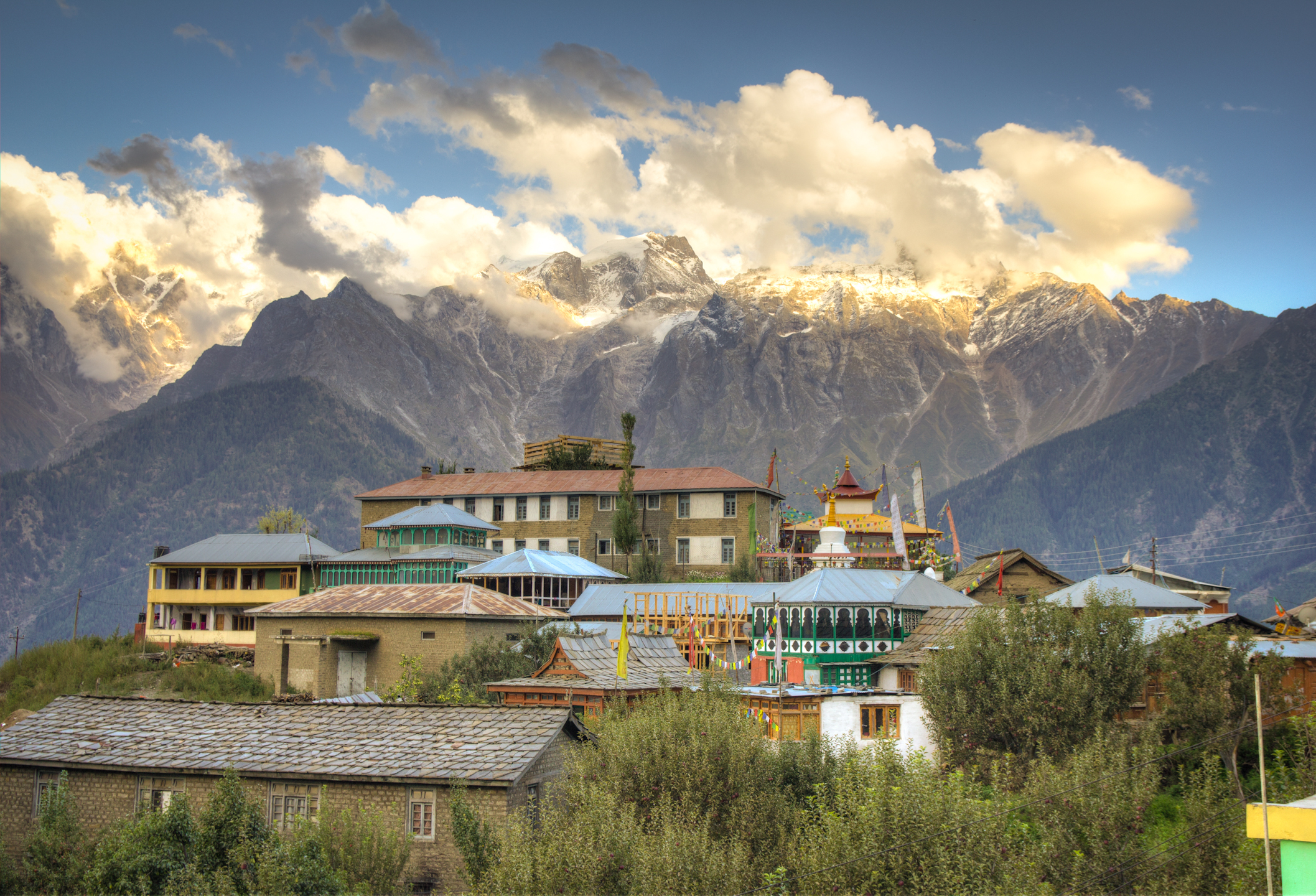
Chitkul is a village in the Kinnaur district of Himachal Pradesh, India, set at roughly 3,450 m in the Baspa (Sangla) valley and widely described as the last inhabited village on the old Indo-Tibetan trade route that civilian roads reach. It sits beside the clear Baspa river beneath high snow peaks, with wooden Kinnauri houses, the Mathi Devi temple, and a much-photographed roadside sign for the 'last dhaba of Hindustan'. The road continues toward the border but is a restricted military zone beyond the village. MyTripMyTravel runs Chitkul as a high, remote day-and-night, an acclimatised drive up the Sangla valley, a riverside walk, and a night under some of the clearest skies in the Himalaya.
Chitkul earns its fame honestly: it is, on this route, the last village civilians can drive to before the land tips toward the Tibet frontier. At about 3,450 m in the Baspa valley of Kinnaur, it is a cluster of slate-and-timber Kinnauri houses set against snow peaks, with the Baspa river running cold and clear below. The road that reaches it ends, for visitors, not far beyond.
The village is small and its pleasures are quiet ones, the Mathi Devi temple with its carved wooden shrine, potato and buckwheat fields, prayer flags, and a famous roadside dhaba that bills itself as the last in Hindustan. What draws travellers is the sense of arrival at an edge, the purity of the light and air, and night skies that, at this altitude and remoteness, are extraordinarily dark and star-filled.
MyTripMyTravel treats Chitkul as a genuine high-altitude posting rather than a checkbox. We usually stage the approach through Sangla lower in the valley to acclimatise, drive the rough final stretch slowly, and keep the itinerary gentle at altitude. Guests should know the honest realities, thin air, cold nights even in summer, basic village infrastructure, and a working border zone just beyond, all of which our planners brief and buffer.
At a glance
Chitkul in brief
When to visit
May to June, September to October
The road to Chitkul is realistically open from around May to October. May to June bring green meadows and flowing snowmelt; September to October, after the monsoon, deliver the clearest air and first dustings of fresh snow. Nights are cold even in summer, so warm layers are essential year-round. From roughly November to April, heavy snow closes the upper Baspa road and the village largely empties. The monsoon (July to August) risks landslides on the approach, so we prefer the shoulder months and keep the schedule flexible.
Things to do
Experiences in Chitkul
Baspa riverside walk
An easy escorted amble along the clear, cold Baspa beneath snow peaks, the defining Chitkul experience.
Mathi Devi temple
The village's revered carved-wood temple to the local goddess, a fine example of Kinnauri craftsmanship.
The 'last dhaba of Hindustan'
The famous roadside dhaba near the road's end, a hot chai and a photograph at a genuine geographic edge.
Kinnauri village and field walk
A slow wander through timber houses, potato and buckwheat fields, and prayer-flag lines with a local guide.
Night-sky viewing
At this altitude and remoteness the skies are exceptionally dark; clear nights offer some of the finest stargazing in the region.
Getting there
How to reach Chitkul
Chitkul is reached by a rough mountain road up the Baspa valley from Sangla (≈ 24 km) and Karcham on NH5; the final stretch is slow and best driven in daylight.
The nearest airport is Shimla (SLV) with limited service; most guests fly to Chandigarh (IXC) and drive up over two days, acclimatising en route.
Our GPS-tracked, high-clearance mountain vehicles handle the Sangla-Chitkul legs with drivers experienced on remote, high-altitude Kinnaur roads.
Where to stay
The most comfortable option, riverside camps and lodges lower in the valley at Sangla or Rakcham, used as a warmer acclimatisation base.
Simple, warm Kinnauri homestays in the village itself for guests who want to wake at the edge; infrastructure is basic and heating limited.
Seasonal premium tented camps along the Baspa, blending comfort with a genuine wilderness setting.
Where to eat
Hot, simple food at Chitkul's roadside dhabas, rajma-chawal, Maggi, parathas, and endless chai; choices are minimal, which we flag in advance.
Home-cooked highland food built around local potatoes, buckwheat, and seasonal greens, eaten with the host family.
Fuller menus at the camps and lodges lower down in Sangla and Rakcham, including trout from the Baspa where available.
Go deeper
More on Chitkul
Good to know
Chitkul, your questions
Is Chitkul really the last village?
It is the last inhabited village that civilian roads reach on this route toward the Tibet border. The road does continue a short way beyond, but into a restricted military zone that visitors cannot enter, which is part of what gives Chitkul its 'edge of the map' feeling.
Do I need a permit to visit Chitkul?
Indian and foreign visitors can generally reach Chitkul itself without an Inner Line Permit. Areas beyond the village toward the frontier are restricted and off-limits. We confirm the current position before travel, as border-area rules can change.
How cold does it get, and is it safe at altitude?
Nights are cold even in summer and freezing in the shoulder seasons, so warm layers are essential. At around 3,450 m, mild altitude effects are possible; we acclimatise gradually via Sangla and keep the pace gentle.
Can I visit Chitkul in winter?
Usually not by road, heavy snow typically closes the upper Baspa route from around November to April and the village largely empties. We plan Chitkul for the May to October window and buffer for weather.
Continue exploring
Pairs well with Chitkul


Plan with us
Design a private journey through Chitkul.
Tell us your dates and what you love. Our travel desk builds a private, chauffeured itinerary around Chitkul and the wider North India, with handpicked hotels and a transparent quote, usually within a few hours.
Related journeys
Plan your trip
Plan your Chitkul trip
Free, no obligation quote. Your details stay private.