
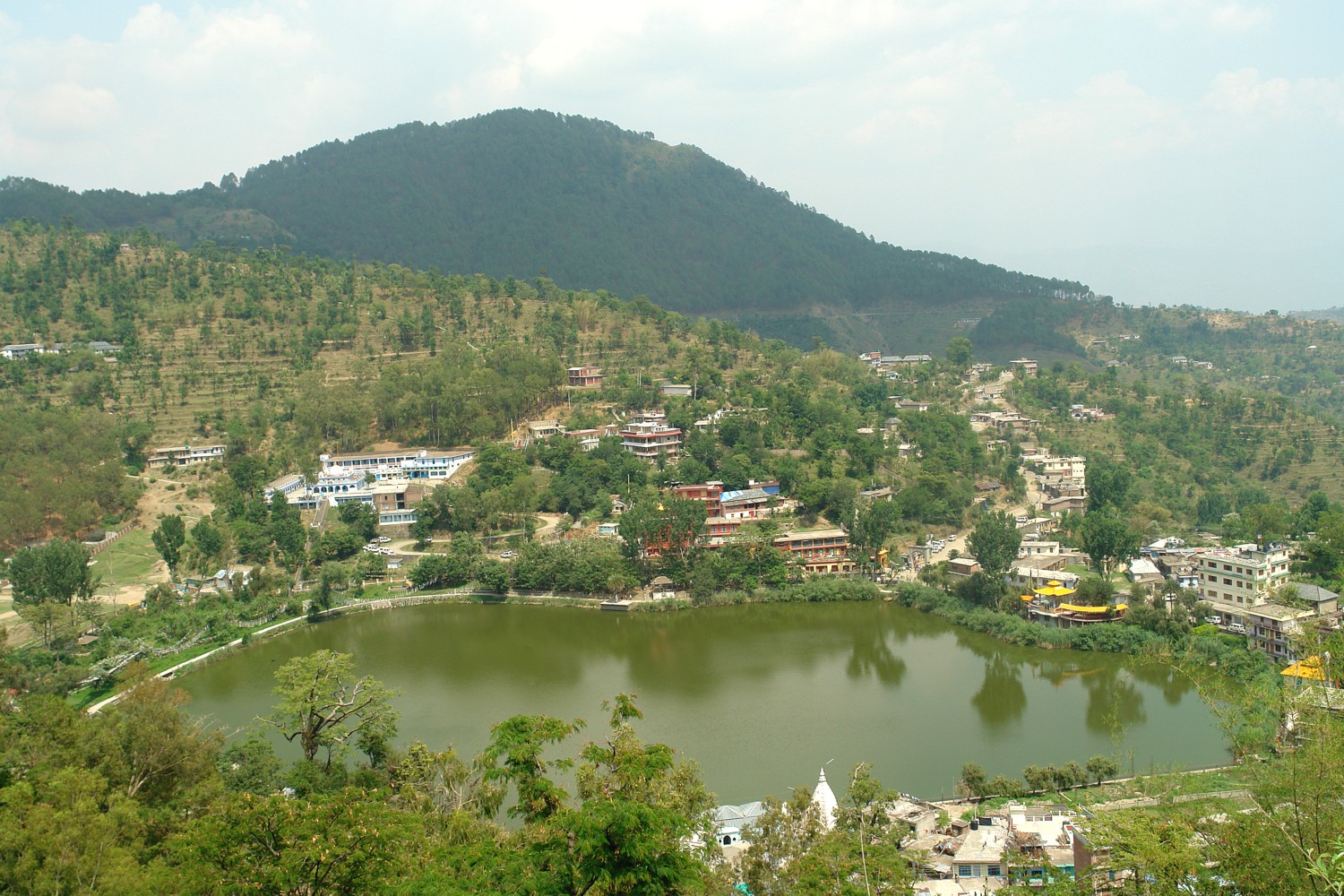
Rewalsar
The Sacred Lake of Three Faiths
Overview
Rewalsar is a small town built around a sacred lake in the Mandi district of Himachal Pradesh, India, set at roughly 1,360 m about 24 km from Mandi. The lake is revered by three faiths: Buddhists know it as Tso Pema and link it to Padmasambhava (Guru Rinpoche), who is said to have set out for Tibet from here and is honoured by a towering hillside statue; Hindus associate it with sage Lomas and Lord Shiva; and Sikhs venerate it for Guru Gobind Singh's stay, marked by a gurudwara. Monasteries, temples, and famed floating reed islands ring the water. MyTripMyTravel runs Rewalsar as a respectful pilgrimage-and-serenity visit.
Rewalsar is one of the rare places sacred to three religions at once, and its whole character flows from the small, dark lake at its centre. Set at about 1,360 m in the hills near Mandi, the lake, Buddhists call it Tso Pema, the 'lotus lake', is ringed by monasteries, temples, and a gurudwara, and is famous for clumps of reeds that drift across its surface, revered by pilgrims as floating islands.
Each faith reads the water differently. For Tibetan Buddhists, Rewalsar is bound to Padmasambhava, the tantric master said to have departed for Tibet from here; a colossal statue of him rises on the hillside above, and several gompas cluster around the shore. Hindus connect the lake to the sage Lomas and to Lord Shiva and keep temples at its edge. Sikhs revere it because Guru Gobind Singh is believed to have stayed here, an event marked by a lakeside gurudwara. Above the town, the Naina Devi temple and a set of caves add further layers of devotion.
MyTripMyTravel runs Rewalsar as a quiet, respectful visit rather than a checklist stop, usually as a half-day or day excursion from Mandi. We arrange escorted walks around the lake and up to the Padmasambhava statue and the monasteries, and brief guests on the etiquette a shared sacred site asks for: modest dress, removing shoes at shrines, and calm, unobtrusive conduct around pilgrims and prayer. The reward is one of Himachal's most peaceful and unusual spiritual settings.
At a glance
Rewalsar in brief
When to visit
October to June
The clear, cool months from October to June are the most comfortable for walking the lakeside circuit and climbing to the Padmasambhava statue and monasteries. Autumn and winter bring crisp air and fine light, though winter mornings can be cold and misty over the water. Buddhist festival days, when pilgrims gather in number, are especially atmospheric but busy. The monsoon (July to September) greens the hills but can bring landslides on the approach from Mandi, so we keep schedules flexible and drive with care then.
Things to do
Experiences in Rewalsar
Lakeside pilgrimage circuit
A respectful escorted walk around the sacred lake, past the monasteries, temples, and gurudwara that ring the water, with its famous floating reed islands.
Padmasambhava statue
The towering hillside statue of Guru Rinpoche above the lake, honouring his link to Rewalsar and reached by a short climb with wide views.
Buddhist monasteries (gompas)
The Nyingma and Drukpa Kagyu monasteries around the shore, welcoming to respectful visitors and rich in Tibetan art.
Gurudwara & Hindu temples
The lakeside gurudwara marking Guru Gobind Singh's stay and the Shiva and Krishna temples that share the sacred shore.
Naina Devi temple & caves
A climb above the town to the Naina Devi temple and the meditation caves associated with Padmasambhava, for quiet and a lake panorama.
Getting there
How to reach Rewalsar
Rewalsar is reached by a winding hill road from Mandi (≈ 24 km); the climb is short but narrow and best driven slowly, and we usually run it as an excursion from a Mandi base.
The nearest airports are Bhuntar (Kullu-Manali, KUU) and Shimla (SLV) with limited service; most guests fly to Chandigarh (IXC) and continue by our fleet via Mandi.
The nearest broad-gauge railheads are at Chandigarh and Kiratpur; onward travel to Rewalsar via Mandi is by our fleet.
Our GPS-tracked, orthopedic-grade vehicles handle the transfer from Mandi and the winding climb up to the lake.
Where to stay
The most comfortable option, full-service hotels in Mandi, about 24 km away, with Rewalsar visited as a day or half-day excursion.
Simple guesthouses run by the Buddhist institutions around the lake, for pilgrims and guests who wish to stay by the water; facilities are basic.
Modest hotels and lodges in Rewalsar town itself for those who want to wake beside the sacred lake.
Where to eat
Momos, thukpa, and butter tea at the monastery cafés and Tibetan-run eateries around the lake.
Simple vegetarian meals in keeping with the sacred setting, served at the temples, langar, and small kitchens by the shore.
Fuller multi-cuisine menus back in Mandi, from Himachali dham to North Indian standards, for a proper sit-down meal.
Go deeper
More on Rewalsar
Good to know
Rewalsar, your questions
Why is Rewalsar sacred to three religions?
The lake is holy to Buddhists, Hindus, and Sikhs together. Buddhists know it as Tso Pema and tie it to Padmasambhava, who is said to have left for Tibet from here; Hindus link it to the sage Lomas and Lord Shiva; and Sikhs revere it for Guru Gobind Singh's stay, marked by a gurudwara. Monasteries, temples, and the gurudwara share the same shore.
How should I behave at Rewalsar?
As at any active shrine, with respect. We advise modest dress, removing shoes where required, keeping quiet around pilgrims and prayer, and asking before photographing people or ceremonies. It is a living place of worship for three faiths, and our guides brief the etiquette on arrival.
What are the floating islands?
They are clumps of matted reeds that drift across the lake's surface, which pilgrims regard as sacred floating islands. Whether or how they move depends on wind and season, so sightings vary, they are part of the lake's revered character rather than a guaranteed spectacle.
How long do I need at Rewalsar?
A half-day to a full day is usually enough for the lakeside circuit, the Padmasambhava statue, the monasteries, and the gurudwara. Most of our guests base in Mandi, about 24 km away, and visit Rewalsar as an excursion.
Continue exploring
Pairs well with Rewalsar


Plan with us
Design a private journey through Rewalsar.
Tell us your dates and what you love. Our travel desk builds a private, chauffeured itinerary around Rewalsar and the wider North India, with handpicked hotels and a transparent quote, usually within a few hours.
Related journeys
Plan your trip
Plan your Rewalsar trip
Free, no obligation quote. Your details stay private.