

Sangla
The Heart of the Baspa Valley
Overview
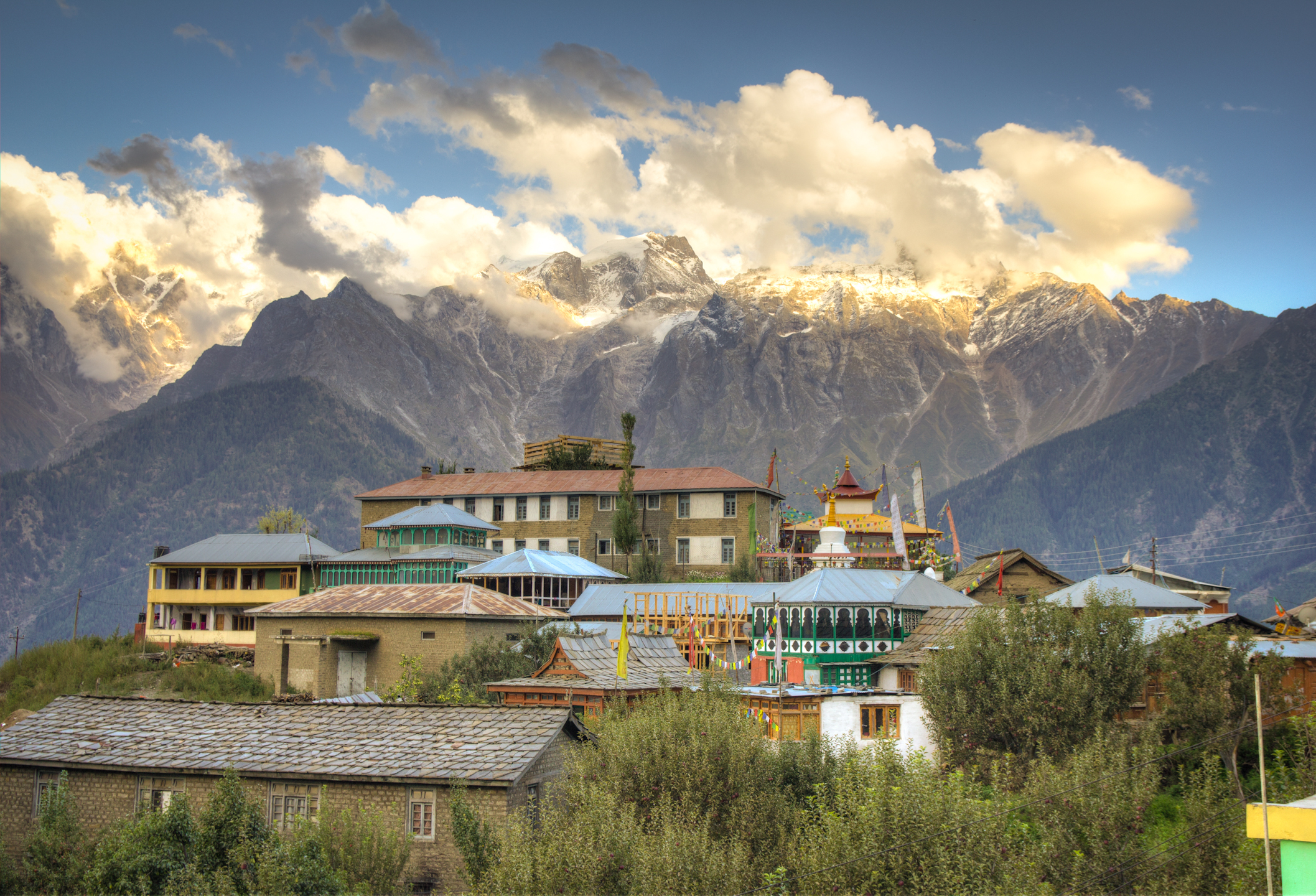
Sangla is a town in the Kinnaur district of Himachal Pradesh, India, set at roughly 2,700 m in the Baspa valley, often called the Sangla valley, beside the clear Baspa river. It is the main hub of the valley, ringed by apple orchards, snow peaks, and traditional Kinnauri timber-and-stone houses. Above the town stands Kamru, a fort-village with a Badrinath (Badri Vishal) temple that was once the capital of the old Bushahr state, while the Bering Nag temple sits in Sangla itself. The last village, Chitkul, lies about 24 km further up. MyTripMyTravel runs Sangla as an acclimatised Kinnaur base, riverside days, orchard walks, and Kinnauri heritage.
Sangla is the beating heart of the Baspa valley, one of the loveliest in Kinnaur. At about 2,700 m, the town sits beside the fast, clear Baspa river, hemmed by apple orchards and, above them, a wall of snow peaks. It is the valley's natural hub, larger and more serviced than the hamlets beyond it, yet still built in the slate-roofed, carved-timber Kinnauri style that gives the whole valley its character.
History sits just above the town. The fort-village of Kamru, reached by a climb through orchards, was once the capital of the princely state of Bushahr and keeps a Badrinath (Badri Vishal) temple within its old timber tower; in Sangla itself, the Bering Nag temple honours the local deity. The valley runs on apples and trout, a hatchery on the Baspa supplies the streams, and the road continues past the villages of Rakcham toward Chitkul, the last inhabited village civilians can drive to on this route.
MyTripMyTravel uses Sangla as the acclimatisation base for the upper Baspa. We stage the ascent here before the higher, thinner air of Chitkul, arrange orchard and Kamru walks, riverside time, and the drive up-valley, and keep the pace gentle at altitude. The approach, a turn off NH5 at Karcham onto a steep, narrow valley road, is spectacular but slow, so we drive it in daylight with buffer for weather.
At a glance
Sangla in brief
When to visit
May to June, September to October
The Baspa valley road is realistically at its best from around May to October. May to June bring green meadows, blossom, and flowing snowmelt; September to October, after the monsoon, deliver the clearest air, the apple harvest, and the first fresh snow on the peaks. Nights are cold even in summer, so warm layers are essential. From roughly November to April, heavy snow closes stretches of the upper valley and the higher villages empty. The monsoon (July to August) raises the risk of landslides on the approach, so we prefer the shoulder months and keep schedules flexible.
Things to do
Experiences in Sangla
Kamru fort-village & Badrinath temple
A walk up through orchards to Kamru, once the capital of Bushahr state, with its old timber tower and Badri Vishal temple.
Baspa riverside & orchard walks
Easy escorted walks along the clear Baspa and through the apple orchards that clothe the valley floor.
Bering Nag temple
Sangla's carved-wood temple to the local deity, a fine example of Kinnauri craftsmanship in the heart of town.
Rakcham & the upper Baspa
A drive up-valley through the timber village of Rakcham toward Chitkul, past meadows, orchards, and snow peaks.
Trout at the Baspa hatchery
A visit to the valley's trout hatchery on the Baspa, source of the fresh trout served at the camps and lodges.
Getting there
How to reach Sangla
Sangla is reached by turning off NH5 at Karcham onto a steep, narrow valley road up the Baspa; the climb is spectacular but slow and best driven in daylight.
The nearest airport is Shimla (SLV) with limited service; most guests fly to Chandigarh (IXC) and drive up over two days, acclimatising en route.
The nearest broad-gauge railhead is at Shimla or Chandigarh; onward travel into Kinnaur is by our fleet.
Our GPS-tracked, high-clearance mountain vehicles handle the Baspa-valley legs with drivers experienced on remote, high-altitude Kinnaur roads.
Where to stay
The valley's most comfortable option, riverside camps and lodges around Sangla and Rakcham with Baspa and peak views.
Seasonal premium tented camps along the Baspa, blending comfort with a genuine high-valley setting.
Warm family-run homestays in traditional timber houses, offering local food and real village contact.
Where to eat
Fresh trout from the valley's streams and hatchery, grilled or pan-fried at the camps and lodges where the catch allows.
Hearty highland fare built on local red rice, rajma, buckwheat, and seasonal greens, best eaten in a homestay.
Fuller multi-cuisine menus at the riverside camps around Sangla and Rakcham, from Himachali dishes to North Indian standards.
Go deeper
More on Sangla
Good to know
Sangla, your questions
Do I need a permit for Sangla?
No. Sangla and the main Baspa valley are open to all visitors without an Inner Line Permit. Permits only become relevant deeper toward the Tibet border, beyond the areas most guests visit; we advise if any onward leg requires one.
How does Sangla compare with Chitkul?
Sangla is the valley's larger, more comfortable hub at around 2,700 m, with better lodging and services; Chitkul, about 24 km higher up, is the smaller, more remote 'last village' at around 3,450 m. Many of our guests base and acclimatise at Sangla and day-trip or overnight up to Chitkul.
Is the drive to Sangla difficult?
It is remote but straightforward with the right vehicle. The turn off NH5 at Karcham climbs a steep, narrow valley road that is spectacular but slow and, in places, prone to rockfall. We drive it in daylight with an experienced mountain chauffeur and buffer for weather.
Can I visit Sangla in winter?
It is possible but harder, heavy snow can close stretches of the upper Baspa road from roughly November to April, the higher villages empty, and nights are bitterly cold. We plan Sangla mainly for the May to October window and keep the fleet flexible.
Continue exploring
Pairs well with Sangla


Plan with us
Design a private journey through Sangla.
Tell us your dates and what you love. Our travel desk builds a private, chauffeured itinerary around Sangla and the wider North India, with handpicked hotels and a transparent quote, usually within a few hours.
Related journeys
Plan your trip
Plan your Sangla trip
Free, no obligation quote. Your details stay private.